Why the agrifood industry needs VR
The agrifood sector faces a unique combination of challenges: high staff turnover, multilingual teams, critical safety and hygiene procedures, complex industrial sites that are difficult to showcase, and a constant need for fast, effective training. Virtual reality didn't arrive in this industry as a passing trend - it addresses very real, day-to-day problems.
At explorations360, we have been supporting the agrifood sector for several years. From training centers to trade shows, from temporary worker onboarding to immersive certification exams, here is how VR is concretely transforming practices across the industry.
Onboarding and safety: training in minutes instead of hours
The first - and arguably most impactful - use case is new employee onboarding. In the agrifood industry, temporary workers make up a significant share of the workforce. They sometimes arrive in the morning to start the same day, often without speaking the local language.
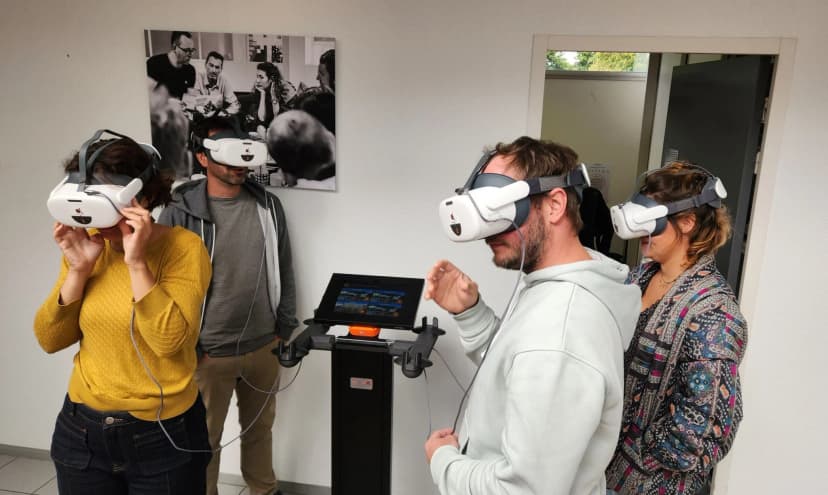
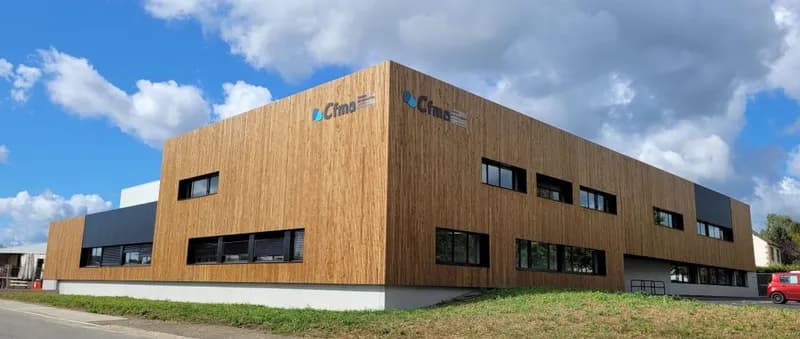
At the CFMA Cooperl in Lamballe-Armor, we deployed a multilingual 360° VR onboarding and safety course for temporary workers. Safety instructions, job-specific procedures, and hygiene protocols are delivered in immersion, in each worker's native language. The message is standardized across all sites, learning time is reduced, and traceability is ensured.
This is not a pedagogical gimmick. It is an operational response to a daily challenge: how to reliably and verifiably transmit critical procedures to diverse profiles, quickly.
Site showcasing: making the usually closed-off visible
An agrifood facility is not a place you can easily visit. Sanitary constraints, sensitive production areas, logistics flows - opening doors to the public or even to partners is not always possible. Yet, demonstrating expertise, commitments, and facilities is a major communication challenge.
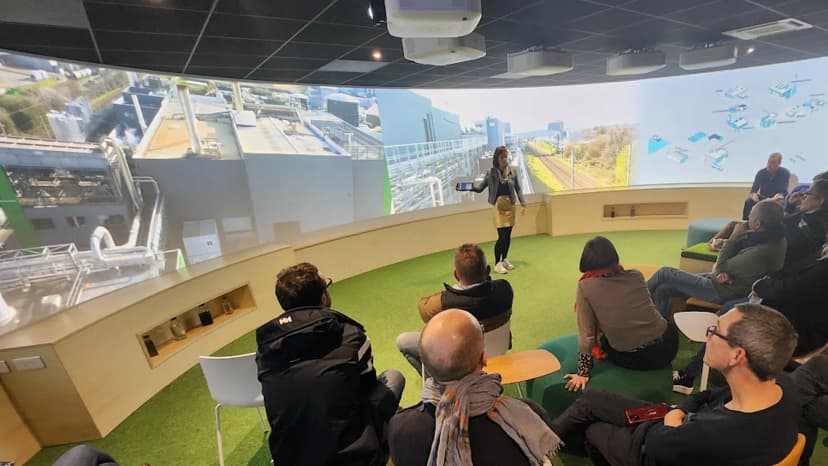
Cooperl Environnement chose a radical approach: La Bulle, a 50 m² immersive room designed to showcase their environmental commitments. The experience multiplied visits by five. Visitors no longer read a CSR report - they experience the group's commitment from the inside.
BASF followed a similar approach with an immersive 3D experience presenting their precision spraying equipment. VR makes what is usually reserved for experts accessible and understandable to all.
R&D and trade shows: communicating innovation differently
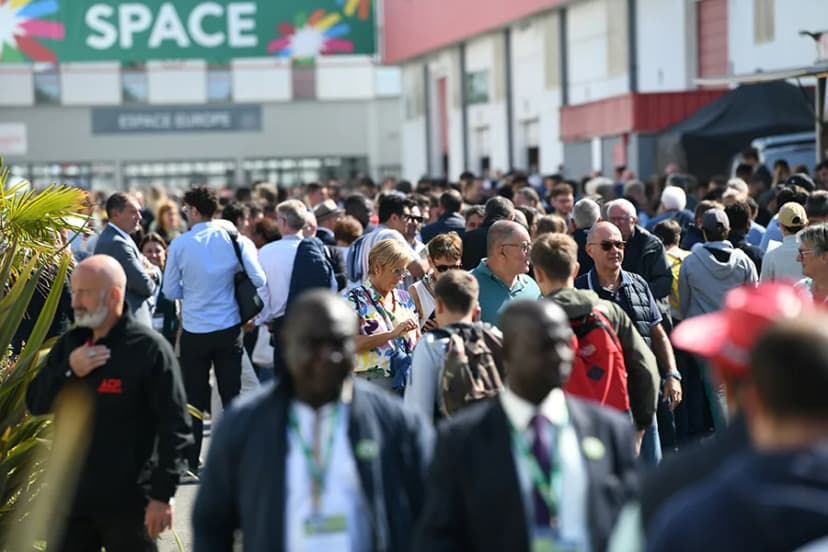
Agricultural trade shows are key moments for the industry. SPACE in Rennes, the Paris International Agricultural Show, regional technical events - this is where contacts are made, innovations are showcased, and partnerships are built.
At SPACE Rennes, we presented immersive experiences that turn complex R&D protocols into engaging guided tours. Visitors put on a headset and discover in 360° what a poster or brochure can only describe.
Phyteis took this further at the Paris Agricultural Show with a VR experience that immerses visitors from the vineyard to the bottle. In just a few minutes, the general public understands crop protection challenges - a topic usually reserved for specialists.
Assessment and certification: VR as an examination tool
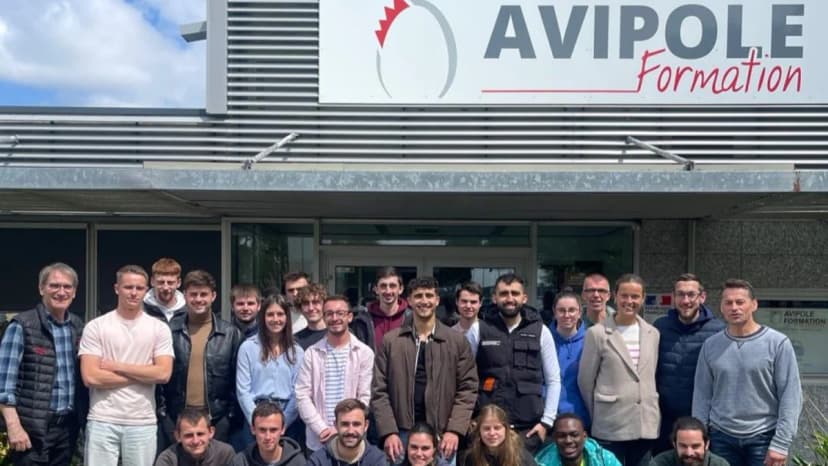
This is perhaps the most innovative use case. At Avipole Formation, the leading poultry training center in Ploufragan (France), students now take their oral examination in virtual reality.
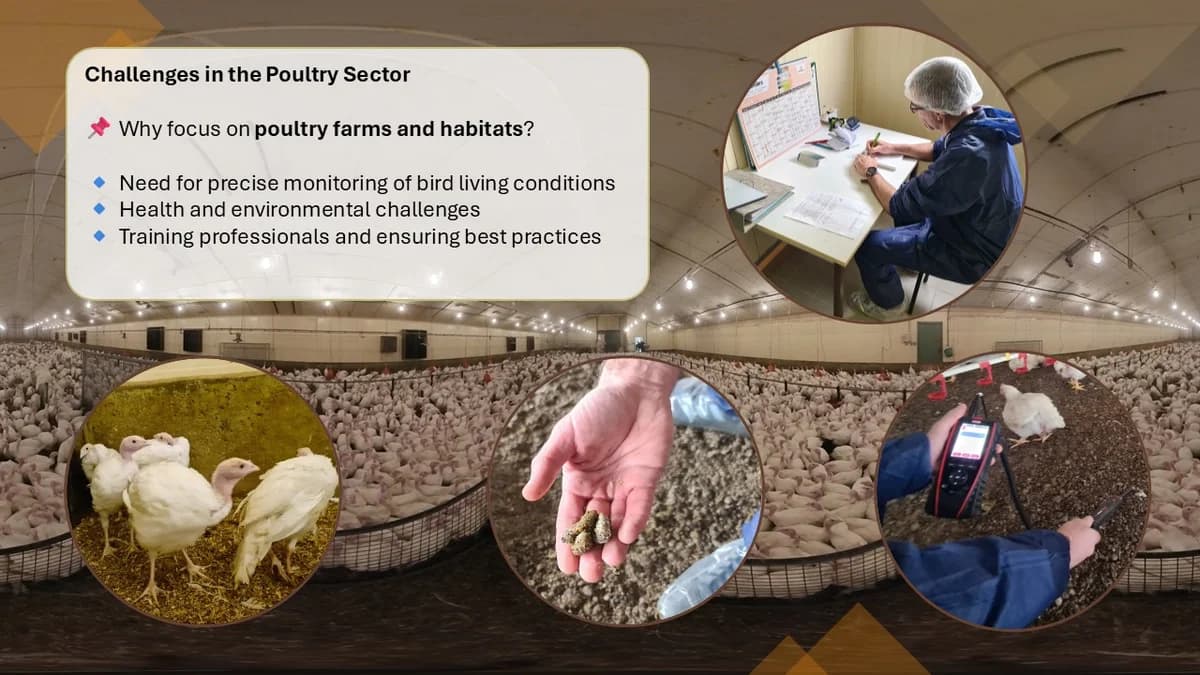
The principle: students are given a library of 360° images from poultry farms, including deliberate flaws. They must build the correct virtual tour on easystory360, push it to a VR headset, then present it to a jury while navigating their life-size immersive environment. The examiner follows along in real time on a tablet via screen mirroring.
Students are no longer asked to recite knowledge. They are asked to demonstrate practical skills in an immersive environment, exactly as they would in the field. VR becomes a professional certification tool.
Livestock monitoring: document, archive, share
Beyond training and assessment, a major poultry industry group already uses easystory360 for daily livestock monitoring. An advisor or farmer can capture 360° images and videos of their buildings, timestamp them, archive them, and organize them into a structured tour.
Before an inspection visit, the farmer prepares a 360° site survey and shares it online with their advisor. After the visit, the advisor archives timestamped observations and shares a narrated tour. From one visit to the next, building conditions can be visually compared. And everything can be shared remotely with a veterinarian, auditor, or technician - no travel required.
What makes the difference in agrifood
VR works in this sector because it addresses very concrete constraints:
- Natively multilingual: a single tour available in multiple languages, without recreating the content
- Offline-capable: easybox360 kits work without internet, even inside a livestock building
- Rugged: the hardware withstands intensive daily use - our installation at the Aquarium of Monaco ran for 10 years without maintenance
- Simple: trainers create and update tours on easystory360 with no technical skills required
- Traceable: every training session can be tracked and documented
Going further
Each case presented in this article has its own detailed write-up. Click the links to discover the behind-the-scenes of each deployment, field feedback, and lessons learned for your own project.