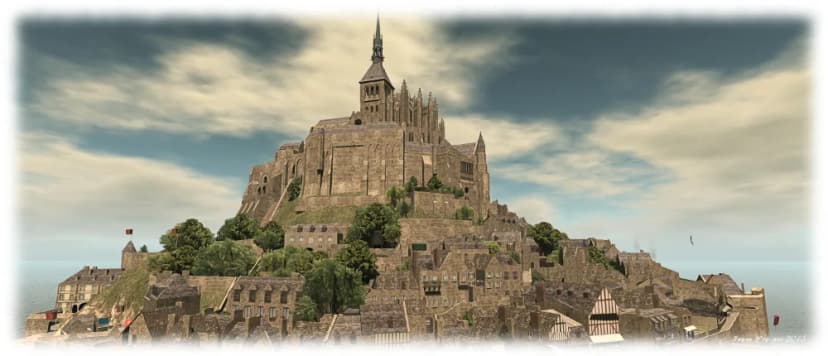
Before Facebook, before Second Life, there was "Le Deuxième Monde" - the first European metaverse, launched in 1997 by Canal+/Vivendi Multimedia. That's where it all started for me: a virtual reconstruction of Paris where you could stroll as an avatar, buy apartments, and chat in digital cafés. Twenty-five years later, the promises haven't changed. The tools have.
"While it may still be a buzzword for newcomers, the metaverse is no longer new to its enthusiasts - it has existed for over 20 years. On the B2B side, metaverse-related opportunities already exist, and capital-intensive industries are already leveraging the undeniable monetization potential of virtual worlds in various forms." - METADAYS 2022
The Metaverse - does it actually exist?
Exactly one year ago (at the time of writing), Facebook became "Meta", claiming the word "Metaverse" for itself. For some, this went completely unnoticed; for others, it instantly ranked among the top 10 most divisive controversies on social media.
At the two extremes of the battlefield, roughly speaking: die-hard fans of Cyberpunk culture (1) on one side, facing marketers (2) chasing viral marketing on the other - and in the middle, players busy structuring their services. All of this playing out in front of an audience that is often skeptical and lost in a nebula of announcements and articles from countless self-proclaimed "top experts".
(1) The first group are fans of utopias or dystopias, particularly the novel Snow Crash. They dream of roaming a digital parallel world similar to our own through their alter-ego - a world where all fantasies are possible, technologically advanced but rather disorganized. For them, THE Metaverse doesn't exist yet.
(2) The second group are advertisers, and as soon as anyone mentions an online shared space, a VR headset, or a 360° experience, they pull out the magic word "Metaverse" - like a party game where you must slip in the mystery word at all costs, even if nobody understands what it's actually for!
Snow Crash, by Neal Stephenson - 1992: the author describes a rather apocalyptic universe from which characters can momentarily escape by diving into a parallel virtual reality universe, a "meta-universe" he calls the Metaverse. The Greek prefix META is particularly well chosen, as depending on context it expresses reflection, change, succession, going beyond, alongside, between, or with. A similar escape concept appears in Spielberg's film "Ready Player One".
So… who's right?
The answer isn't simple. Let's say that today there are embryos of this new world - "protometaverses" - each with their own use cases.
OK, but are there any useful examples?
Use cases start with needs. Paradoxically, our business in the immersive tools industry began with questions related to our hobbies. Our team loves the sea (we live right next to it), and we're scuba divers. A few years ago, tasked by my dive club with teaching the theory courses, I noticed that nothing had changed in 70 years of recreational diving: the technology had evolved, but not the teaching method! In the age of Web 2.0 and 3D gaming, we were still stuck with thick textbooks full of formulas, and no solutions had been implemented to address the most recurring problems:
- explaining topics that can be tedious and/or complex (physics courses, biology, repetitive exercises, inadequate training rooms, etc.)
- deploying heavy, highly technical equipment - limited in quantity, time-consuming to prepare, and only operable by certified operators who aren't always available (scuba tanks, high-pressure filling, creating different gas mixtures, etc.)
- gathering learners at the same place at the same time to optimize instructor resources
- verifying knowledge acquisition in an environment that can become very hostile (deep underwater) if the course material wasn't properly absorbed
Training made simple…
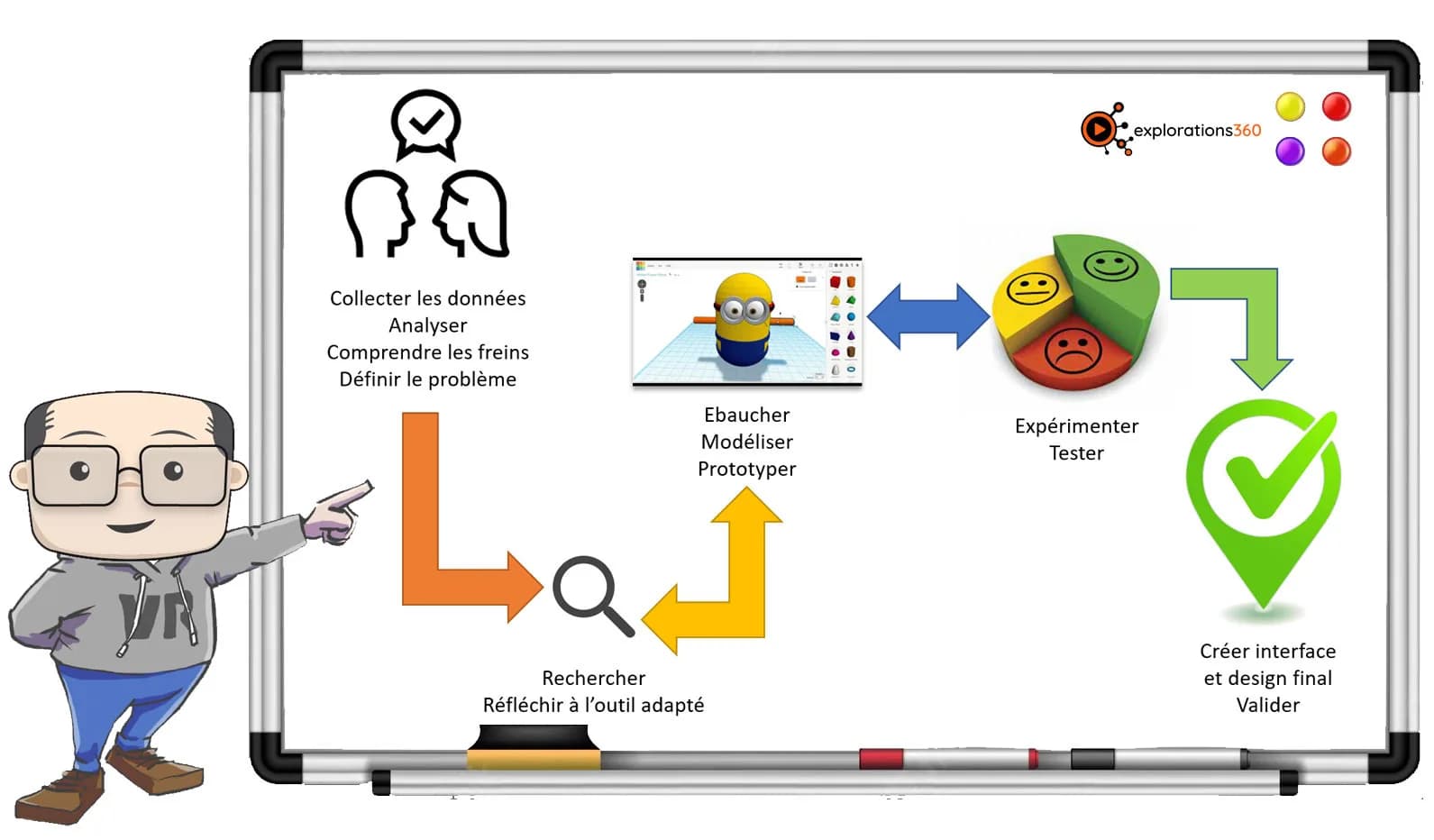
OK, but given all that, we needed to find the right tool…
What better way to overcome these barriers than an environment that resembles our own: immersive, spatialized in 360°, where everyone can join and talk as if in person, meeting up in 2 clicks without needing a car?
And what if you could also distribute as much equipment as you want, alter the laws of physics, die 3 times an hour from decompression accidents and come back to life… all through avatars, from your couch with a cold drink in hand?
In 2007, an online immersive world made all of this possible: Second Life®, and we made the most of it!
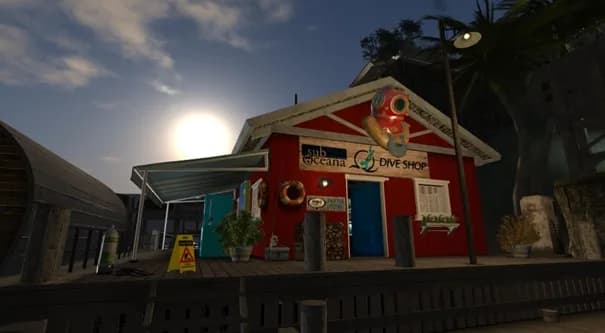
The advantage of this tool is that it's accessible from anywhere by anyone with an Internet connection. That was enough to pique the curiosity of PADI® (6,600 dive centers and over 128,000 professional members), and our volunteer work for the dive club turned into a company specializing in immersion. Since then, training has been delivered virtually by PADI® through our scuba simulation equipment brand "subOceana®" (don't surf - dive into the web).
Twelve years after its launch, in the middle of the pandemic, we had to give it a facelift to accommodate new features and come to the rescue of dive clubs whose training rooms had emptied of members! To this day, the training session costs €250 and delivers the same certificate for everyone, whether taken at a dive club or in Second Life®.
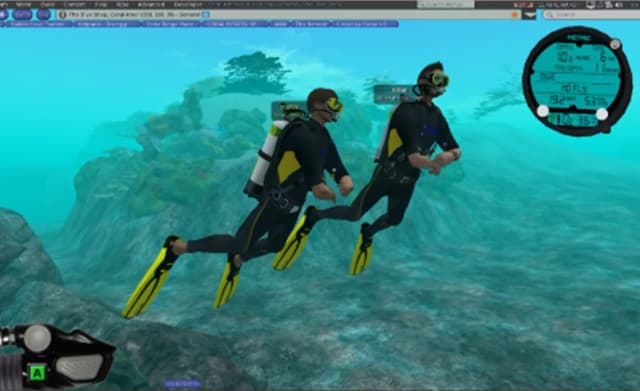
Complete your EANx Specialty Online and in a 3D Virtual World
Enriched Air Diver is PADI's most popular specialty for certified divers. It's also a great way for qualified divers from any training agency to earn a PADI certification. You'll do this online with the new PADI Enriched Air Diver eLearning and in a stunning 3D virtual environment where you'll experience highly realistic gas analysis and scuba diving simulations. This immersive technology provides an unparalleled learning experience.
So, what's it like inside?
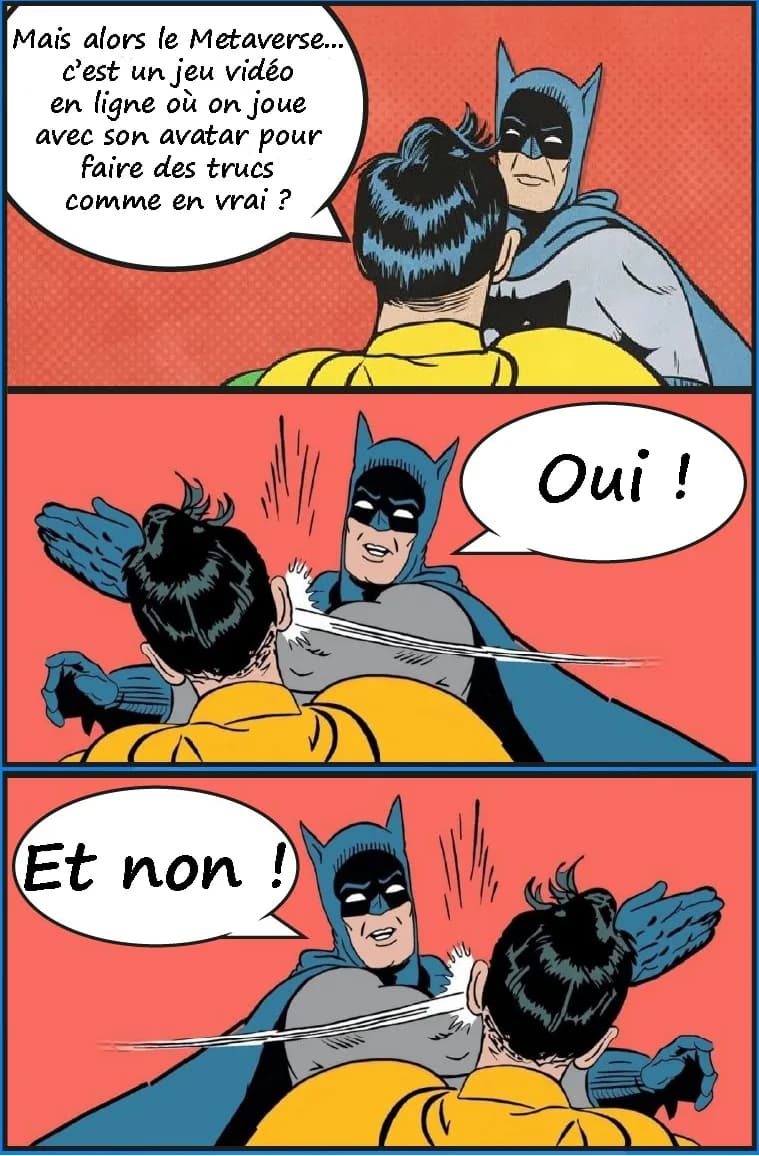
The Metaverse is not a video game. You can create games within it, but it's primarily an open tool, entirely configurable by its users. It's an evolution of how we use the internet, with the following core value propositions:
- A digital, spatialized, and immersive world built by its users
- Persistent (when I turn off my PC, the world keeps living)
- The ability to interact with virtual elements in the environment and with other users
- The ability to manage your avatar (appearance, gestures, walk, expressions, etc.). With first-person view in VR headset immersion and/or third-person avatars (controlled and viewed from outside). Persistent avatars.
- Ubiquity (being in multiple places at once by controlling several avatars if desired)
- A diversity of users and communities
- Freedom, unconstrained by arbitrary moral rules
- A universe with its own economy
- An interoperable tool, with the ability to manage your possessions and move between environments if different Metaverse building blocks were based on different technologies
- A multi-platform tool (PC, Mac, smartphones, VR headsets, mixed reality…)
- Decentralization and security (data is certified, and the system belongs to users, not a single entity)
These propositions are organized into 7 layers, here is one model:
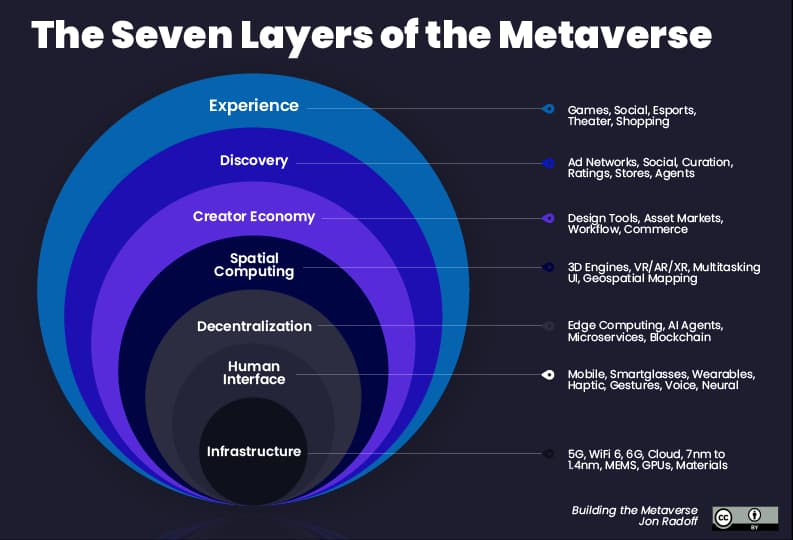
The internet is becoming increasingly spatialized, increasingly immersive, and draws on 3D environments from gaming. But as of today, no single platform checks all the boxes of the concept: everything is being built brick by brick.
But then, who runs this parallel world?
"The metaverse is not 'a metaverse'. It is the next generation of the internet: a decentralized multiverse, led by a new and abundant generation of creators." - Jon Radoff
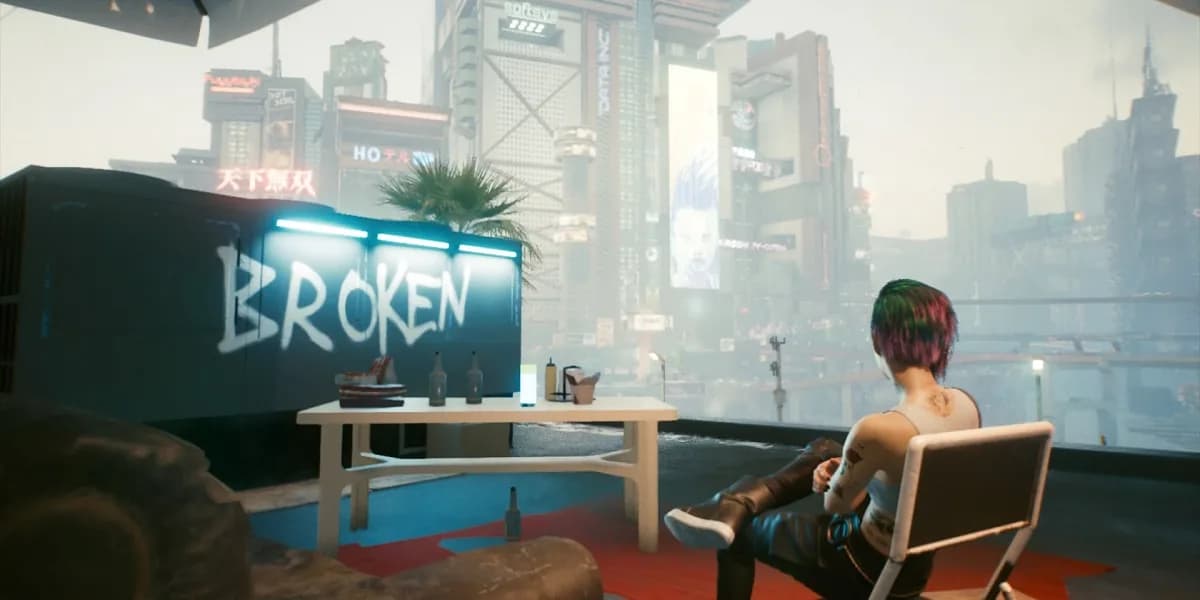
When a single entity, whether private or state-owned, has a monopoly over user data and distribution channels, we know the problems of excess or conversely censorship that follow: Twitter, Facebook, and TikTok are daily examples. Centralization of information also raises cybersecurity concerns: in Europe, most major sensitive companies prohibit the use of American digital development tools to prevent data leaks.
In theory, decentralization is the main pillar of the Metaverse philosophy, but it's still far from being efficient. This is THE source of controversy around Mark Zuckerberg's "META", which has become the symbol of a monopolistic and quasi-totalitarian tool.
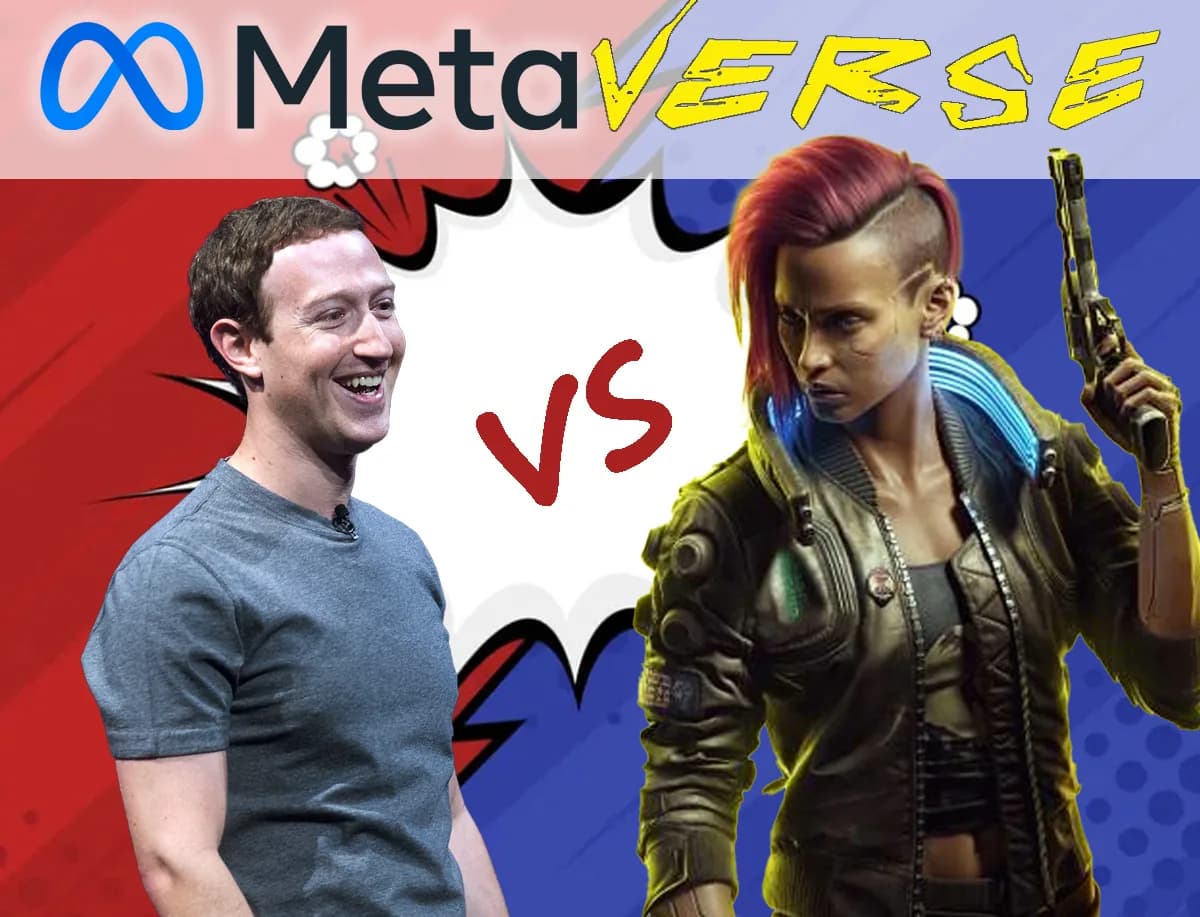
This feeling is all the stronger because everything revolves around a movement at the explosive crossroads of the cyberpunk and libertarian* worlds. It's both a cultural melting pot and a philosophy that advocates a society based on individual freedom, where personal initiative takes precedence. People organize and cooperate as they see fit, following principles of autonomy, responsibility, and commitment. Libertarianism is also founded on private contracts, property rights, the market and free enterprise - the role of the State is limited to that of arbiter and protector of each person's sphere of freedom.
* Classical libertarianism (anarcho-capitalism, right-wing minarchism, etc.) is a philosophical movement that sets out strong principles of individual freedom. This movement is reinforced by left-libertarianism, which adds an egalitarian thesis on the ownership of natural resources.
Today, fragments of decentralized tools exist, with platforms like The Sandbox or Decentraland, built on Blockchain technologies (which is "one" of the building blocks of WEB3). To put it simply, everything is secured, and the operating principle is that data and transactions are shared simultaneously across all users' devices - so no one can press an "Off" button.
Mathematician Jean-Paul Delahaye offers the analogy of a "very large notebook that anyone can read, freely and for free, that anyone can write in, but that is impossible to erase and indestructible."
Although all these goals are far from being achieved, interfaces are being enriched, building tools are becoming less limited, and accessibility has been greatly improved.
OK, so for professionals, where are we headed?
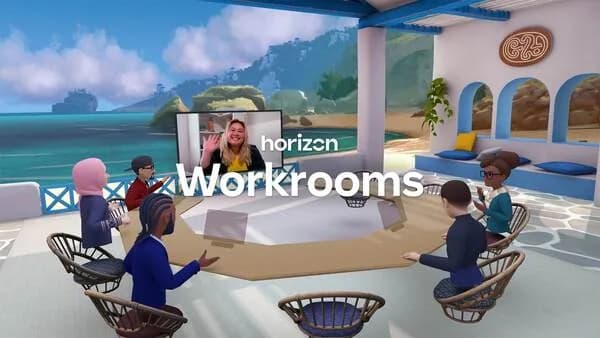
Even though the tools are quite nice to use, apart from acculturation sessions or team building, companies will hesitate to deploy platforms like META - among other reasons because of the rather sensitive GDPR side of things, or the currently unavoidable link to a Meta (Facebook) account.
There is also no truly simple decentralized alternative to deploy in a professional setting for common uses like virtual trade shows or meetings. These solutions require a permanent internet connection (with fluctuating network response times - WEB3 requirements), which isn't always straightforward depending on firewalls or use cases (remote education, for example).
It's also worth remembering the very energy-intensive and still often slow operation for validating even simple operations via the Blockchain system. Platforms like Decentraland are still far from being tools with a fluid user experience, and their future, given this degraded interface context, remains uncertain.
All this noise for nothing?
No! Not for nothing! We are in the process of changing how we approach the dissemination of information and knowledge. Even if WEB3 doesn't yet exist in its ultimate form, it's being built through functional building blocks. While these blocks are not all assembled or interoperable today, they are already effective in their own domains and have brought their share of change, new services, and use cases:
For leisure
- increased ease for online gaming, creating, chatting, attending shows, cybersex (yes… it's often a significant driver), training, showcasing your universe, etc.
At work
- manipulating a city's digital twin directly in your web browser
- using real-time simulation for training, onboarding, etc.
- visiting an industrial site remotely via a VR headset
- discussing with several people in a "3D conference" room
- presenting a product, idea, place, or heritage remotely but in the same virtual space
- browsing a trade show, an event in real-time and attending conferences, interacting remotely
- …
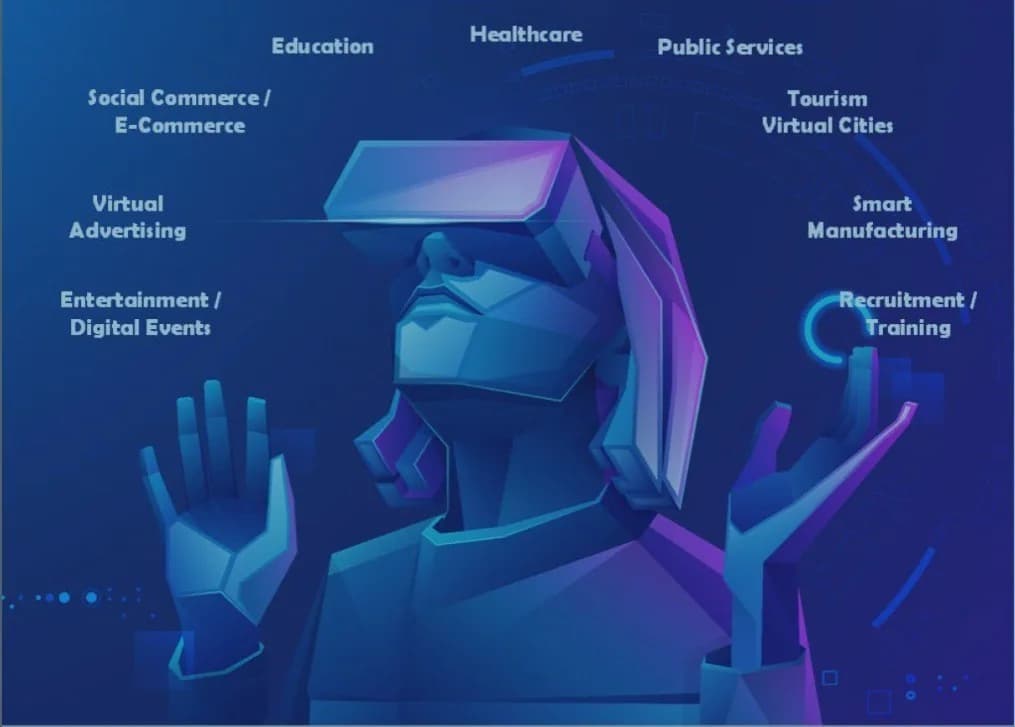
These changes are well perceived across all sectors: from tourism to industry, through training, we have seen the line and client expectations shift. Demand goes beyond integrating "into" the Metaverse - it extends to a desire to use innovative or differentiating tools for communication and work.
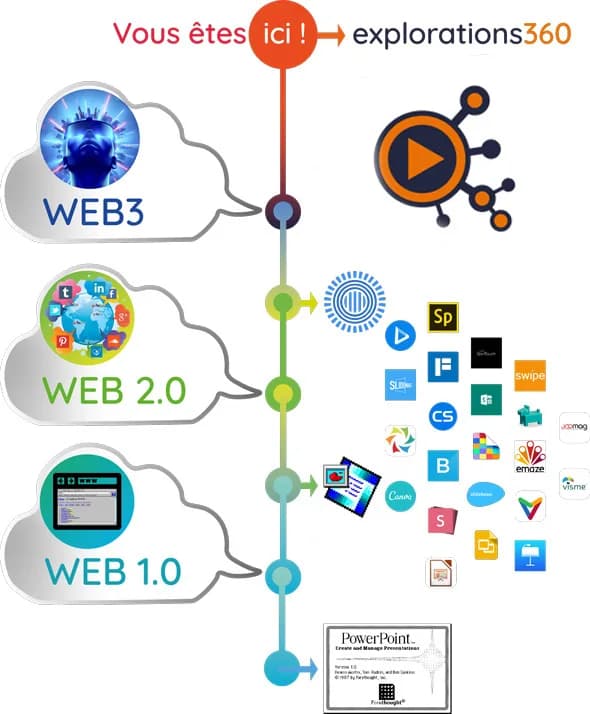
At the beginning of WEB1 (the internet of pages linked together), people typed on keyboards and PowerPoint was born for presentations.
During WEB2 (the internet of connected users), people communicated via video conferencing and Prezi was born for presentations, Moodle for training.
With the arrival of WEB3 (the internet of certified and immutable data), people are already communicating in spatialized 3D, and…
…and since we're on our blog, a bit of self-promotion about our work, because in parallel with our exploration/exploitation of the Metaverse, explorations360 was born from this observation of evolving use cases:
Tools are adapting to the evolution of the web and to the audience entering the job market - raised on Habbo, World of Warcraft, Roblox, Minecraft, Fortnite (and their powerful economic engines). The focus is on content, on Storytelling, and demand is growing for simplified processes of 360° creation, editing, scripting, and publishing.
If you want to explore the Metaverse, understand and anticipate the disruption that's unfolding, you've got it - we can also guide you and take you to our virtual grounds. And go ahead, you can also try the "PowerPoint of the WEB3 era": explorations360, even capable of integrating with your learning management system.
You're also welcome to join us for a (real) dive in Brittany!
Further reading
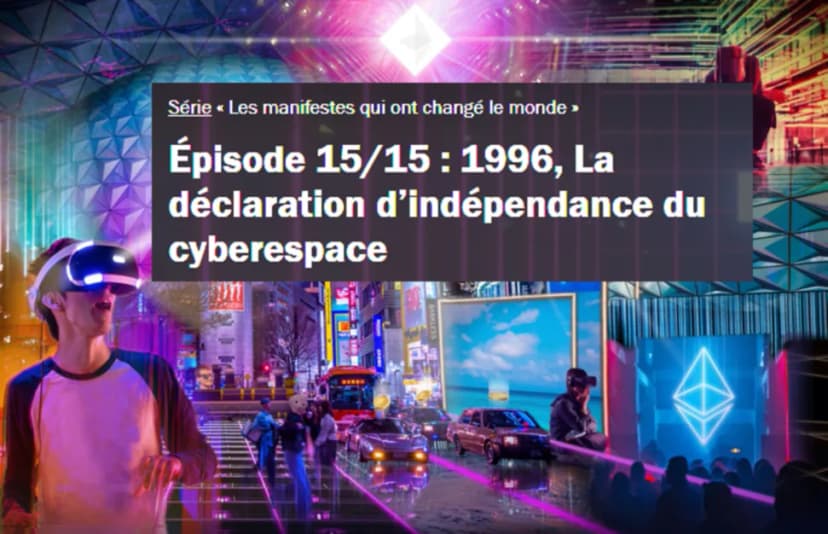
1) The Declaration of Independence of Cyberspace
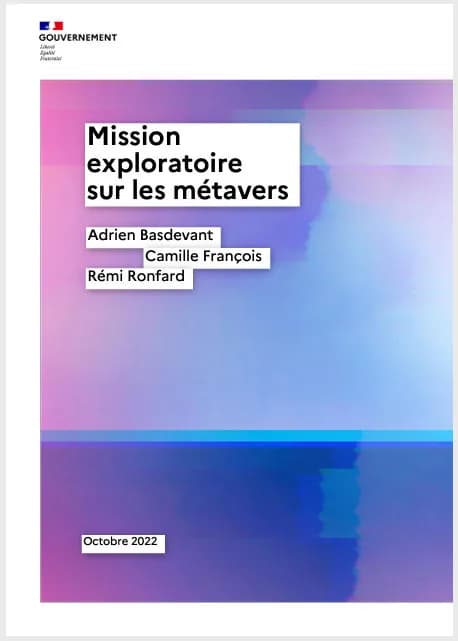
2) French government report. This report, viewed through the lens of the Metaverse, provides a state of the art and forward-looking analysis of digital tools in the broader sense.