

Metaverse Definition
The Metaverse is an open tool, fully customizable by its users. It is an evolution of the Internet offering a digital, spatialized, and immersive world built by its users.
Key characteristics:
- A persistent world that continues after disconnection
- Ability to interact with virtual elements and other users
- Customizable persistent avatars
- Ubiquity (simultaneous presence in multiple locations)
- Its own internal economy
- Interoperability and cross-platform support
- Decentralization and data security
Tourism
Historically a way to discover others and other places. In modern society, it represents:
- Job creation
- Infrastructure development
- Heritage preservation
- Cultural exchanges
- Mutual understanding
- Local community development
Virtual Tourism Through the Metaverse?
The Metaverse does not yet exist in its absolute form but already foreshadows new use cases. The metaverse will never replace real travel, just as flight simulators have not replaced aviation.
However, the question arises: how do we consume travel? Visiting the Sistine Chapel virtually offers several advantages:
- Full control over lighting and atmosphere
- Spatialized sound
- Boundless exploration
- Crowd-free access
Virtual tours are becoming a trend: "Sistine Chapel virtual tour," "Louvre virtual tour," "Lascaux cave virtual tour" are popular keywords on Google.
After the Notre-Dame fire, virtual tours served as an "essential heritage conservatory, accessible from anywhere."
The Role of Social Interaction
Visiting a digital twin of the Vatican does not close off real public access. The richness of travel lies in human exchanges, local atmospheres, restaurants, smells, and recipes.
Use Cases
The tool could enable sharing an immersive experience when:
- Locations are too far away or too expensive
- Tourist pressure threatens the site
- The experience is dangerous or physically impossible
Digital twins enable pre-visit preparation and the discovery of new places to distribute tourist flows.
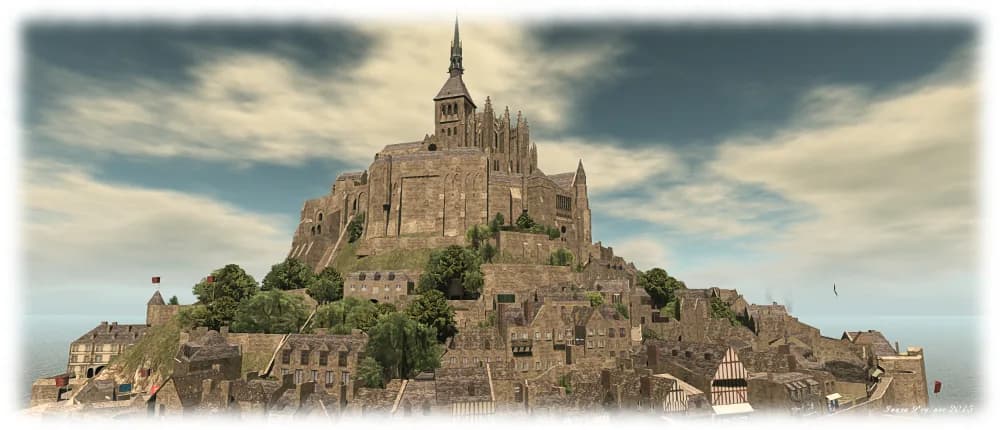
Children's example: "My children have never done a visit with as much curiosity" as during a virtual tour of Mont-Saint-Michel before the real visit.
The Place of Art and Nature
Certain virtual experiences provide access to the inaccessible:
- High mountain summits
- Deep-sea dives
- Lost heritage
- Visions of the future
Laurent Ballesta, an oceanologist, upon discovering a virtual dive at 120 meters with the Coelacanth, exclaimed "I'm going back in!" Fewer people have dived with this fish than there have been humans on the Moon.
What Kind of Tourism Do We Want?
The central question: "What kind of tourism do we want for tomorrow, and how will new tools impact our most harmful behaviors?"
The new generation raised on Fortnite and Minecraft creates content and socializes both online and in person, boosting local tourism around events.