

Explanation
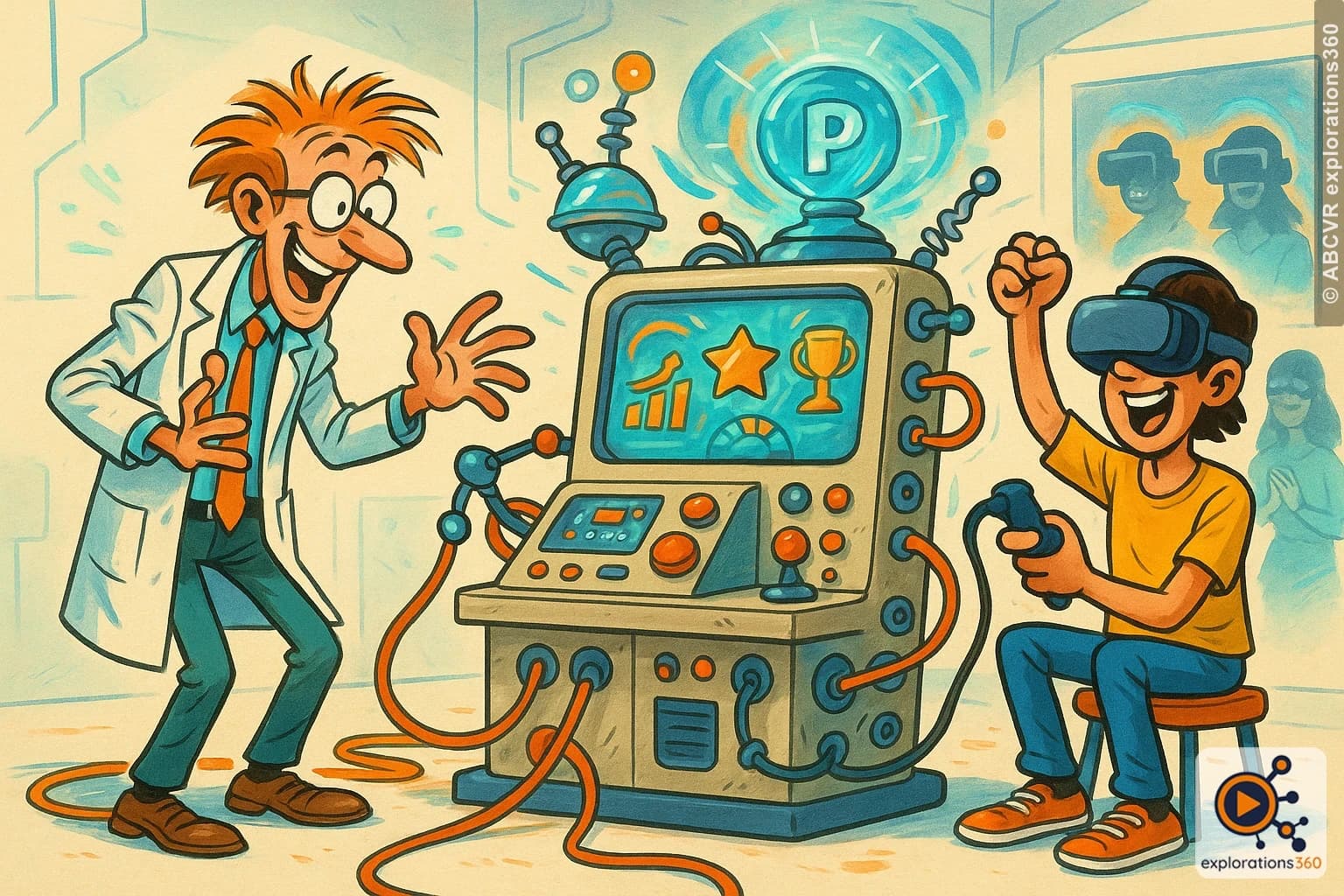
Gamification involves integrating elements from video games (points, levels, badges, leaderboards, challenges) into serious contexts: training, healthcare, marketing, and productivity. In VR, gamification amplifies engagement because immersion makes game mechanics feel more natural and motivating. The learner doesn't follow a course - they take on challenges in an interactive environment.
Real-world example
A VR safety training where the technician earns points by identifying hazards on a virtual construction site, with team leaderboards and progression badges.
Practical applications
- Professional training: turning an e-learning module into an immersive challenge
- Healthcare: gamified VR rehabilitation to maintain patient motivation
- Onboarding: a playful company discovery journey in VR
- Awareness: VR escape game on cybersecurity or eco-responsible practices
Gamification mechanics in VR
Progression and rewards
- Points, badges, levels
- Unlockable content
- Immediate feedback
Example: 'Safety Expert' badge after completing 3 scenarios without errors
Competition and collaboration
- Individual or team leaderboards
- Timed challenges
- Cooperative modes
Example: Two teams compete to extinguish a virtual fire the fastest
Narrative and immersion
- Branching scenarios
- Characters and dialogues
- Consequences of choices
Example: A VR serious game where your management decisions influence the storyline
VR scenario
A food processing company trains its operators on hygiene rules through a VR serious game. Each day, a 10-minute challenge: spot non-compliances in a virtual workshop. Scores are displayed on a team leaderboard. Within 3 months, real-world hygiene incidents drop by 40%.
Why it matters in professional VR
- Gamification in VR multiplies engagement and retention compared to traditional e-learning
- It transforms mandatory training into motivating experiences
- Game data (scores, errors, time) feeds training analytics
- Balance is key: too much gamification can distract from the learning objective