

Explanation
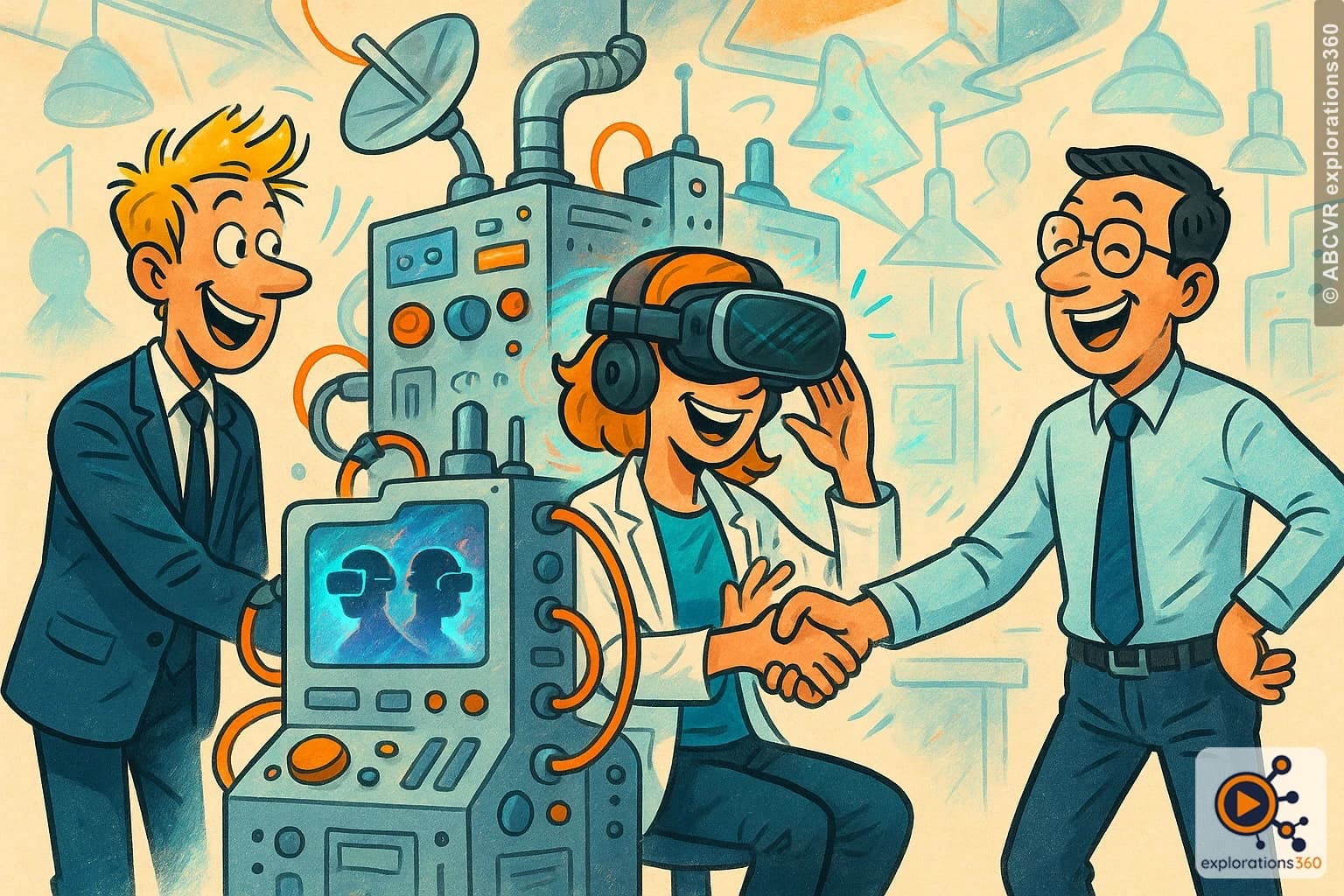
B2B (Business to Business) refers to commercial exchanges between companies. In the XR context, the B2B market is the primary adoption driver: professional training, industrial maintenance, healthcare, architecture. Unlike B2C (consumer market, video games), B2B values measurable return on investment, integration with existing systems, and large-scale deployment.
Real-world example
An industrial company equips its 200 technicians with VR headsets for maintenance training, through a B2B contract with an XR integrator that provides hardware, content, and support.
Practical applications
- Professional training: simulating technical gestures in VR for field teams
- Sales demonstrations: presenting a product or space via virtual tour to a B2B client
- Assisted maintenance: guiding a technician remotely via AR glasses
- Inter-company collaboration: immersive meetings with partners and suppliers
B2B segments in XR
Training and simulation
- Learning professional gestures in VR
- Risk-free scenario practice
- Skills assessment and tracking
Example: VR surgical training for a hospital
Industry and maintenance
- AR assistance in the field
- Digital twins of facilities
- Inspection and quality control
Example: Technician guided by AR glasses on a production line
Architecture and real estate
- Virtual tours of projects
- 3D model review as a team
- Immersive client presentations
Example: A developer offering virtual tours of a building before construction
VR scenario
A machine tool manufacturer offers its B2B clients VR training bundled with the purchase. By the time of delivery, operators have already practiced on the machine virtually. Time to production drops from 3 weeks to 5 days.
Why it matters in professional VR
- B2B accounts for the majority of XR sector revenue today
- Measurable ROI accelerates enterprise adoption
- B2B use cases (training, maintenance, collaboration) are the most mature
- Fleet management (MDM) and IT integration are B2B-specific challenges