

Explanation
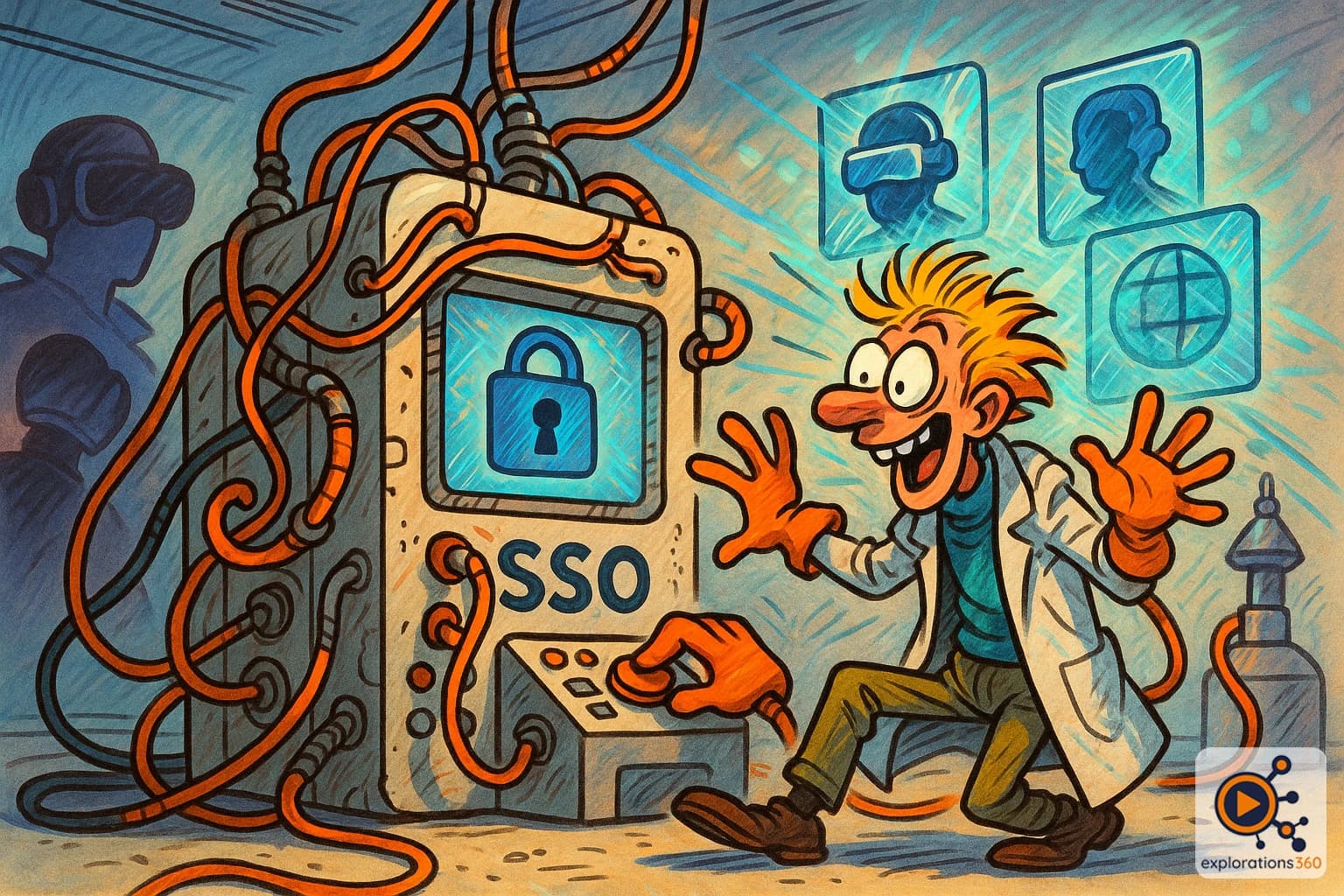
SSO (Single Sign-On) is an authentication mechanism that allows a user to log in once and access all applications and services in an ecosystem without re-entering credentials. In the immersive and training context, SSO simplifies access to LMS platforms, virtual tours, and 360° creation tools by unifying identity management.
Real-world example
When you log into your Google account and then access Gmail, YouTube, and Drive without logging in again -- that is SSO.
Practical applications
- Logging learners into their LMS once to access all available VR/360° training modules
- Unifying authentication across the website, virtual tour platform, and admin back-office
- Allowing employees to access their 360° creation tool with corporate credentials
- Simplifying access to immersive content during trade show demos and sales presentations
SSO protocols and approaches
SSO based on open standards
- SAML (Security Assertion Markup Language) for enterprises
- OAuth 2.0 / OpenID Connect for web and mobile applications
- Compatible with major identity providers (Azure AD, Okta, Google Workspace)
- Integration with corporate directories (Active Directory, LDAP)
Example: An employee logs in via Azure AD and accesses their VR training platform directly without re-entering a password
SSO in immersive ecosystems
- Unified authentication between LMS and 360° training modules
- Single login to create, publish, and track virtual tours
- Centralized access rights management for immersive content
- Complete login traceability for compliance and reporting
Example: An instructor creates a 360° course on the platform, learners access it via the LMS, and statistics flow back automatically -- all with a single authentication
VR scenario
A large company deploys an immersive training platform for its 5,000 employees. Thanks to SSO integrated with their Active Directory, each employee logs in with their usual credentials and immediately accesses the VR/360° training modules assigned to them. Managers track progress from the same dashboard, with no additional password management.
Why it matters in professional VR
- SSO eliminates access friction and increases the adoption rate of immersive enterprise tools
- Centralized identity management strengthens security and simplifies access administration
- Well-integrated SSO is often a prerequisite for large-scale VR training deployments
- GDPR compliance and access traceability are facilitated by centralized authentication