

Explanation
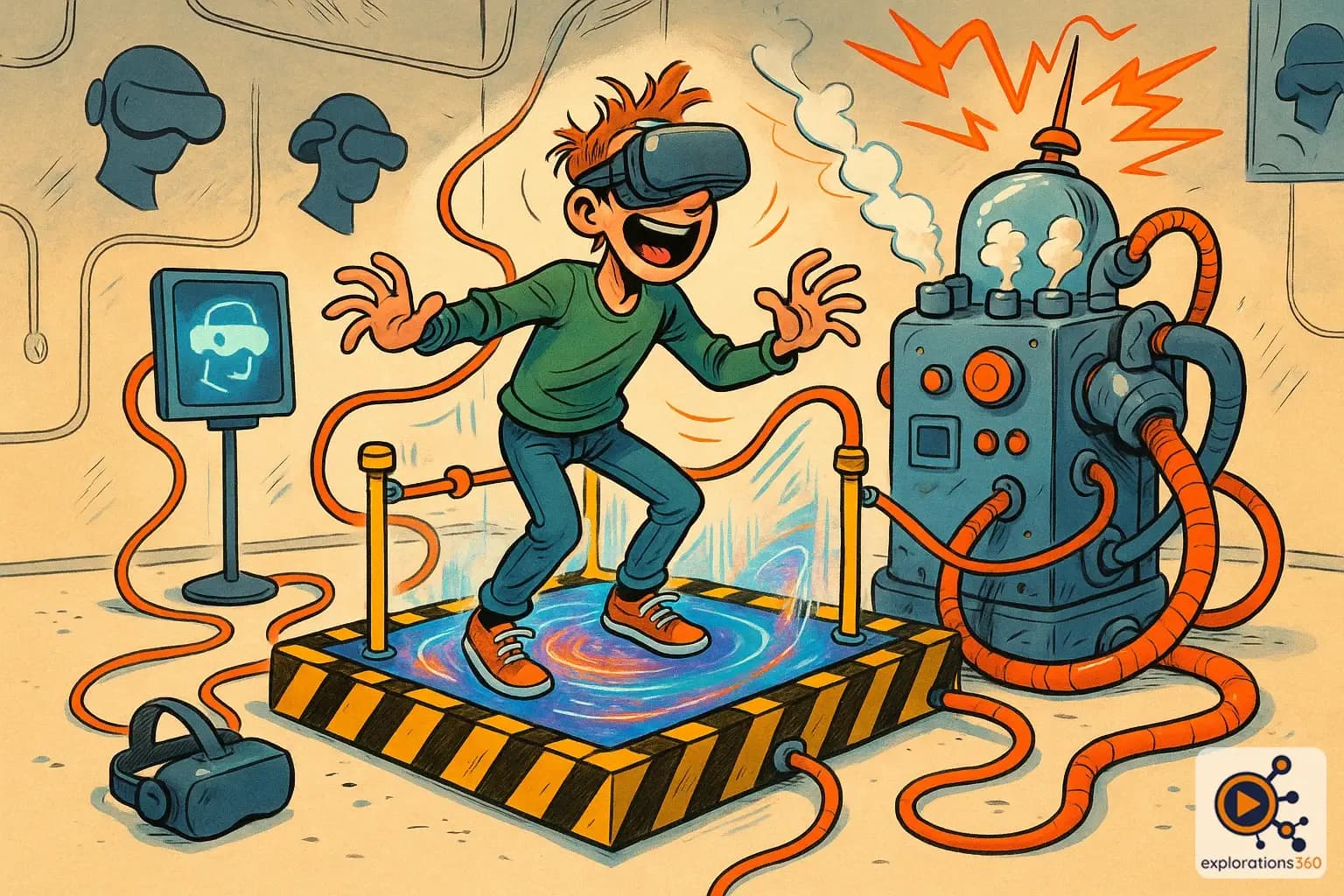
A safe, delimited physical space for moving around in virtual reality.
Real-world example
The 2 m × 2 m zone in your living room that you mark out for playing in VR.
Practical applications
- Safety: defining a clear space free of obstacles to prevent accidents
- Calibration: the headset knows the boundaries of your movement area
- Room-scale: the larger the zone, the more physical movement is possible
- Guardian/Boundary: visual alerts when approaching the limits
Playspace sizes
Stationary (minimal)
- Fixed position, seated or standing
- Sufficient for seated experiences
- ~1 m × 1 m
Example: Flight simulator, VR movie viewing
Standard room-scale
- 2 m × 2 m minimum recommended
- Limited but real movement
- Standard for home/office setups
Example: Most VR games and training applications
Large-scale / Warehouse
- Large surfaces (10 m+ × 10 m+)
- Complete freedom of movement
- Specialized VR centers
Example: Group VR experiences such as escape games
VR scenario
A company sets up a VR training room. It clears a 4 m × 4 m space with a flat floor and no obstacles. The headsets are configured with this zone. Result: trainees can move freely and safely during training sessions.
Why it matters in professional VR
- The playspace determines which types of VR experiences are possible
- Must be planned from the design stage of a dedicated VR space
- Bigger = more immersive, but not always necessary depending on the use case