

Explanation
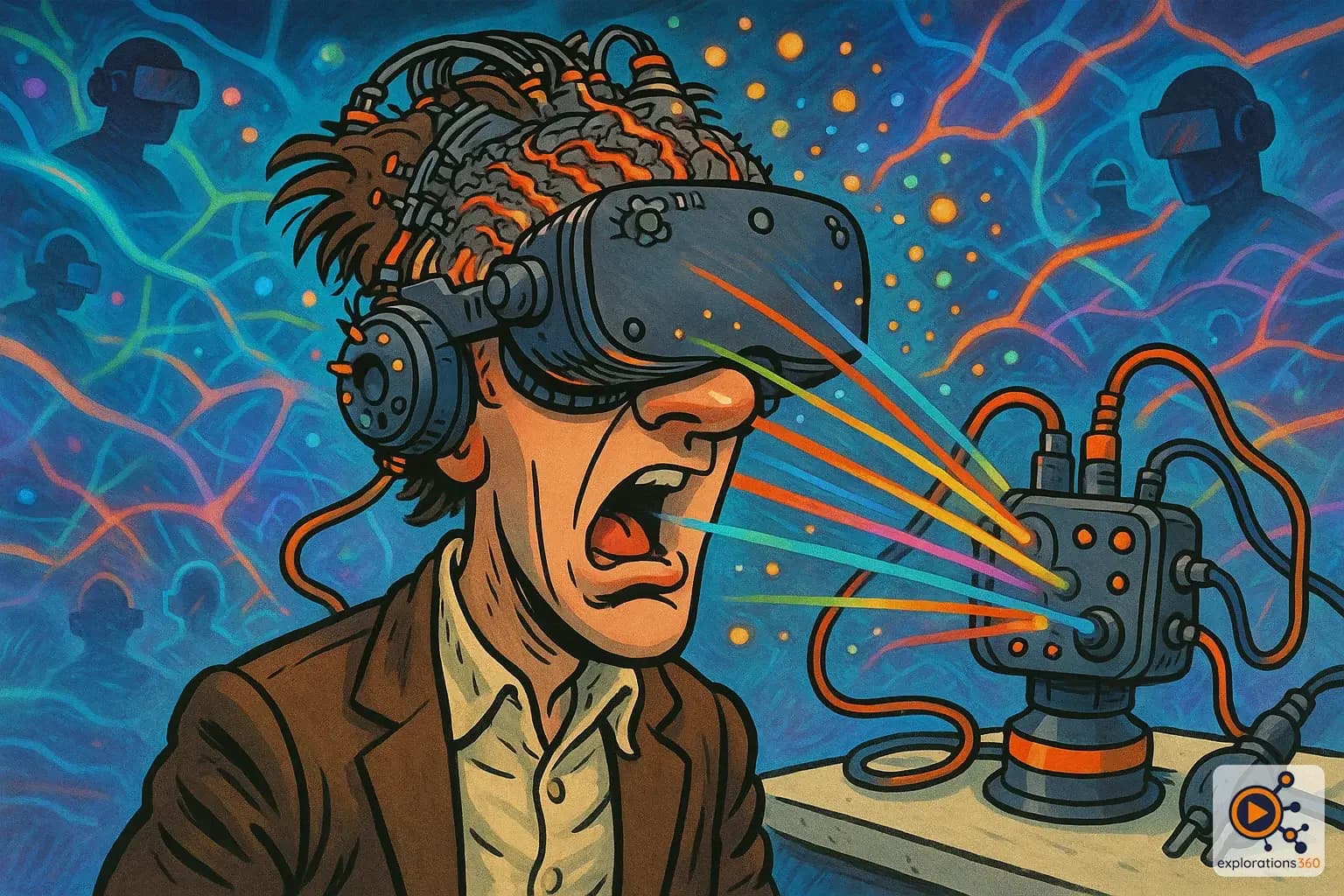
A multisensory experience stimulates several senses at once -- sight, hearing, touch, smell, and even the vestibular system. In VR, each additional sense engaged exponentially strengthens the credibility and memorability of the experience. Modern immersive setups combine visual displays with spatial audio, haptic feedback, motion platforms, and even scent diffusion to create deeply convincing simulations.
Real-world example
A 4D movie that combines image, sound, motion, wind, and sometimes scents.
Practical applications
- Enhanced immersion: the more senses engaged, the more believable the experience
- Improved memorization: multisensory memories are more durable
- Simulation realism: environments that "sound," "vibrate," and "feel"
- Emotional impact: combined senses amplify reactions
Senses stimulated in VR
Sight (always present)
- The foundation of every VR experience
- Stereoscopy, high resolution, wide FOV
- The dominant sense in VR
Example: The VR headset's display screens
Hearing (very common)
- 3D spatial audio built into all headsets
- Strongly contributes to the sense of presence
- Often underestimated
Example: Footsteps approaching from behind you
Touch (developing)
- Controller vibrations
- Haptic gloves and vests
- Force feedback (exoskeletons)
Example: Feeling an impact or a texture
Other senses (emerging)
- Smell: scent diffusers
- Vestibular: motion platforms
- Temperature: heating and cooling devices
Example: Feeling the warmth of a virtual fire
VR scenario
A firefighter training simulation combines vision (flames), sound (crackling, alarms), heat (heating panels), and vibrations (simulated collapse). This multisensory approach creates realistic stress and deep memorization.
Why it matters in professional VR
- Multisensory stimulation is the path to total immersion
- Each additional sense exponentially strengthens credibility
- Cost/impact trade-off: start with audio plus basic haptics, then enrich according to needs