

Explanation
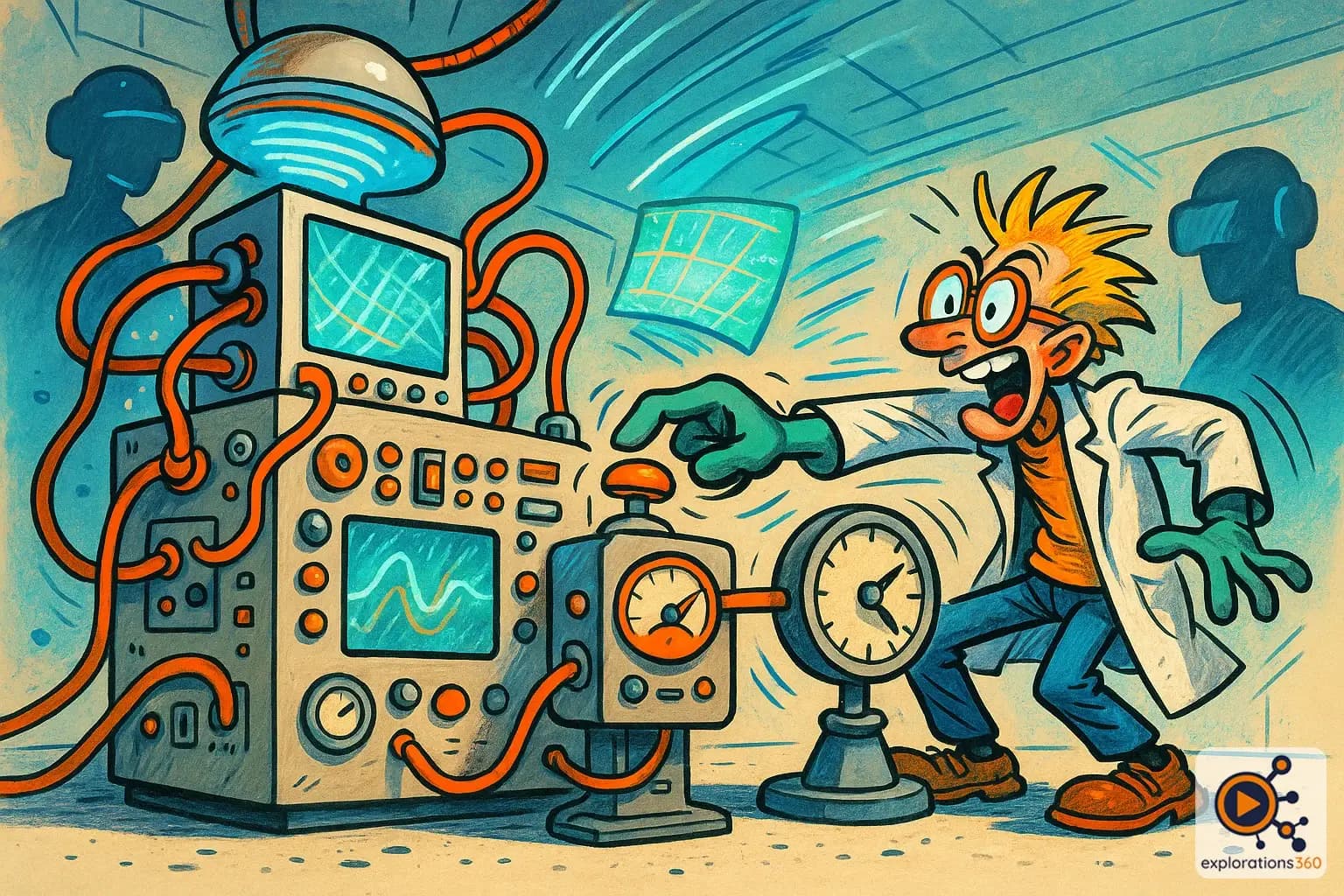
Latency is the time delay between a user's action (such as turning their head) and the corresponding visual update on the display. In VR, latency is the single most critical technical parameter for comfort. Even a few extra milliseconds of delay creates a sensory conflict between what the inner ear feels and what the eyes see, leading to disorientation and motion sickness.
Real-world example
The delay between moving your head and seeing the image update in your headset -- it must stay below 20 ms in VR.
Practical applications
- Motion-to-vision sync: when you turn your head, the image must follow INSTANTLY
- Motion sickness prevention: even a small mismatch triggers nauseating sensory conflict
- Interaction precision: pointing, grabbing, and manipulating without perceptible lag
- Sense of presence: latency breaks the illusion of "really being there"
Critical thresholds
< 20 ms: optimal
- Imperceptible latency for the brain
- Standard for modern VR headsets
- Smooth, comfortable immersion
Example: Quest 3, Vision Pro: approximately 10-15 ms motion-to-photon
20-50 ms: perceptible
- User notices a slight delay
- Possible discomfort during extended sessions
- Acceptable for some short-duration use cases
Example: Poorly optimized VR streaming over WiFi
> 50 ms: problematic
- Visible and disturbing delay
- Motion sickness almost guaranteed
- Unusable for professional applications
Example: Cloud gaming VR over a poor network connection
VR scenario
During an assembly training session, the technician must position a component with precision. At 10 ms of latency, their virtual hand tracks their real gesture perfectly. At 80 ms, it feels like "swimming through molasses" and they miss the manipulation.
Why it matters in professional VR
- Latency is the number one technical factor for VR comfort -- more important than resolution
- It determines whether users can effectively work or train in immersion
- A deciding factor when choosing between a standalone headset and PC/cloud streaming