

Explanation
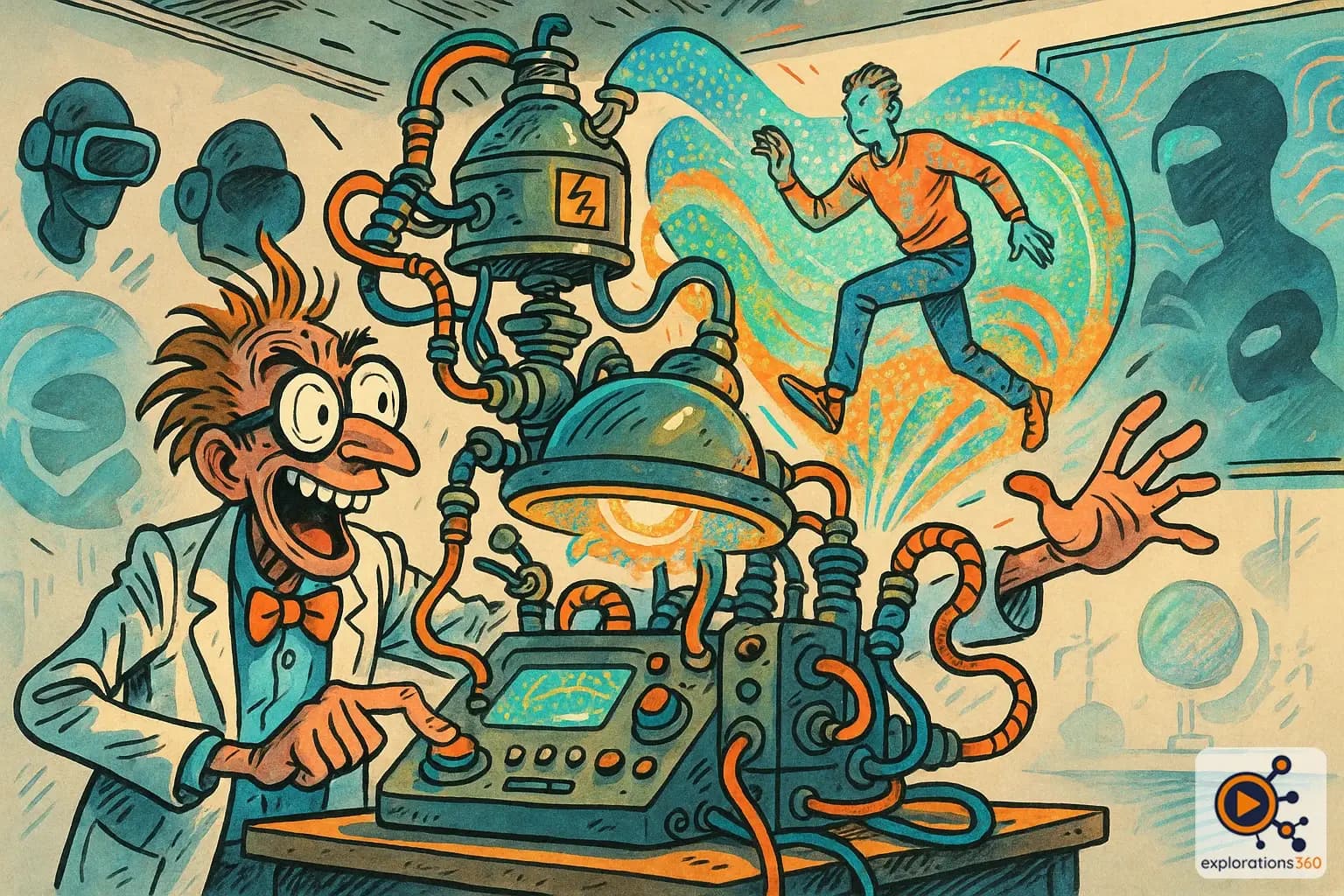
Three-dimensional video recording that allows viewers to move around the subjects.
Real-world example
A video where you can change the viewing angle as if you were in a game.
Practical applications
- Captured performances: concerts, shows, speeches in true 3D
- Training: an instructor who is "present" and viewable from every angle
- Heritage: testimonies of historical survivors accessible in VR
- Sports: replaying a match from any angle
Volumetric capture technologies
Multi-camera studios
- Dozens to hundreds of synchronized cameras
- 360° coverage of the subject
- Professional quality
- Costly infrastructure (Microsoft, Intel Studios)
Example: The Intel studio with 106 5K cameras for capturing football matches
Depth sensors
- Azure Kinect or similar sensors networked together
- More financially accessible
- Lower quality but sufficient for some use cases
- Suitable for small spaces
Example: A yoga studio captured with 8 Azure Kinect sensors
NeRF and AI techniques
- Neural Radiance Fields: reconstruction via deep learning
- Fewer cameras required
- Quality improving rapidly
- Democratization underway
Example: Creating a volumetric video of an object with your smartphone
VR scenario
In a VR museum about the Holocaust, you find yourself face to face with a survivor giving testimony. Captured in volumetric video, she is "truly there" in front of you — you can move closer, see her from the side, perceive her physical presence. This technology preserves these testimonies far more powerfully than a traditional 2D video.
Why it matters in professional VR
- Presence of people: it is as if someone is truly there
- Freedom of movement: the viewer chooses their viewpoint
- Living archive: capturing irreplaceable performances
- Future of media: volumetric video will be the "video" of tomorrow