

Explanation
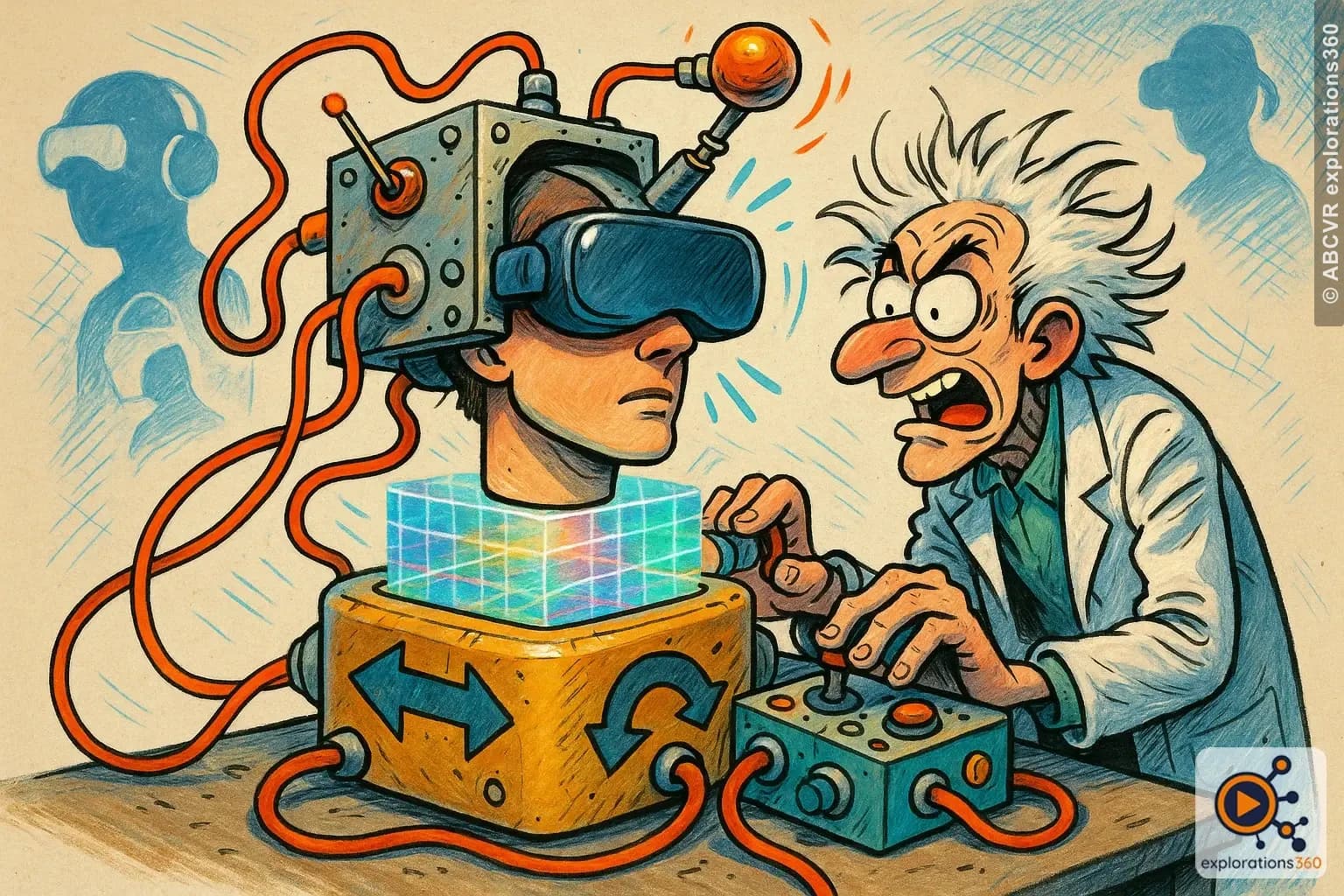
Technology that tracks the user's position and movements in real time.
Real-world example
The sensors that know exactly where your hands are in 3D space.
Practical applications
- Headset localization: knowing where the user is in both physical and virtual space
- Controller tracking: position and orientation of the hands for interactions
- Body tracking: full-body tracking for avatars and advanced simulations
- Zone delimitation: defining a safe play area (Guardian/boundary)
Tracking technologies
Inside-out (the current standard)
- Cameras on the headset that analyze the environment
- No external installation required
- Portable, easy to deploy anywhere
Example: Quest, Pico, HoloLens: cameras built into the headset
Outside-in (high precision)
- Fixed sensors/stations placed in the room
- Consistent millimeter-level accuracy
- Fixed installation, less flexible
Example: SteamVR Lighthouse, OptiTrack for motion capture
Hybrid / Accessories
- Additional trackers (feet, hips, objects)
- Combine inside-out with external trackers
- For full-body or tracked object use cases
Example: Vive Trackers to track feet and hips
VR scenario
In a manual handling training scenario, tracking verifies that the operator is positioned correctly (feet apart, back straight) before lifting a virtual load. Without accurate tracking, it would be impossible to assess posture.
Why it matters in professional VR
- Tracking quality determines the ENTIRE VR experience: interactions, immersion, comfort
- Faulty tracking (drift, loss of tracking) immediately breaks the illusion
- A decisive criterion for professional applications demanding precision and reliability