

Explanation
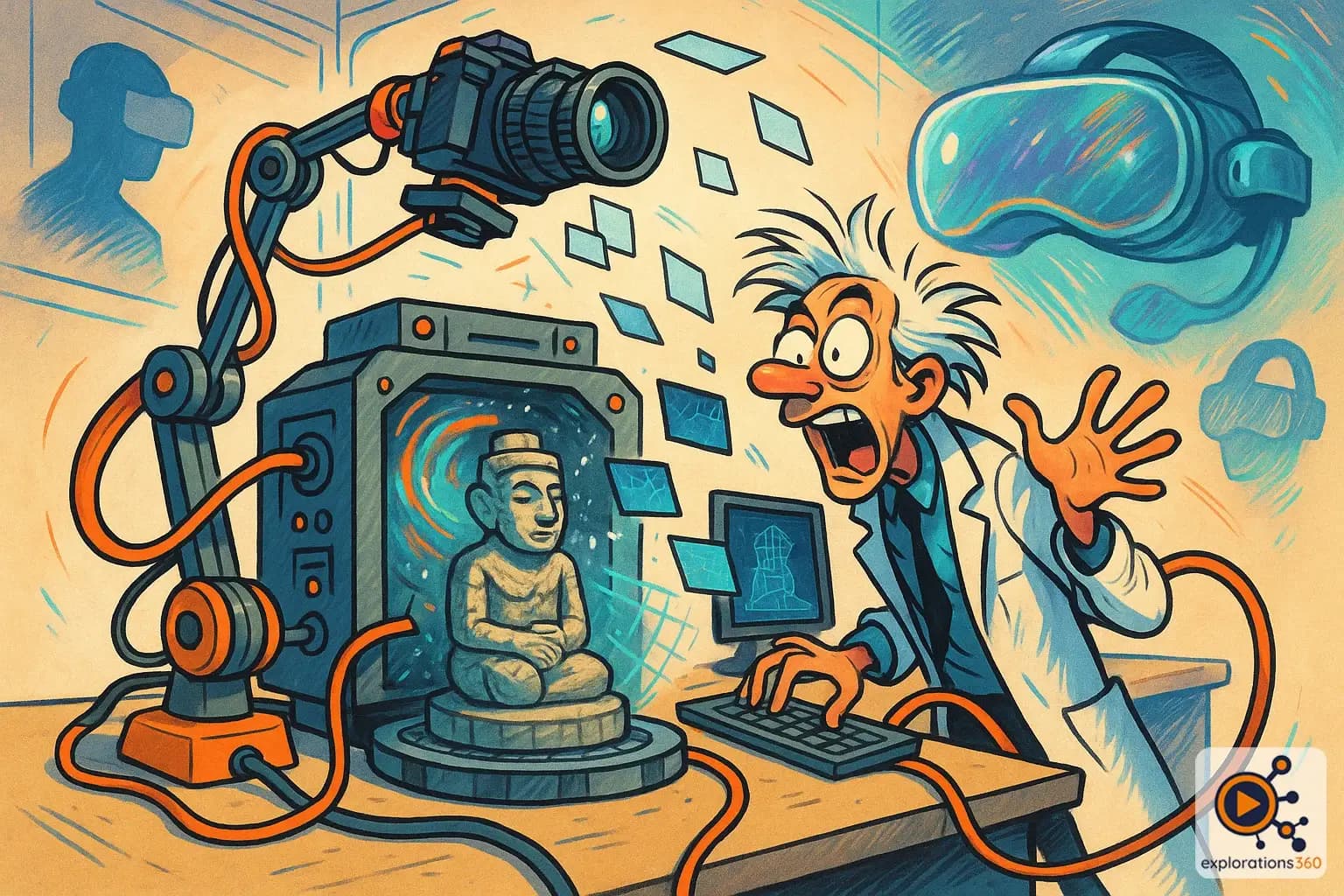
A technique for creating 3D objects from multiple photographs taken from different angles. Software analyzes the overlapping images to reconstruct the geometry, texture, and color of the subject with photorealistic accuracy.
Real-world example
Taking 100 photos of a statue from all angles to create its digital 3D replica.
Practical applications
- Heritage digitization: creating 3D models of monuments, artworks, and archaeological sites
- VR asset creation: photorealistic objects and environments derived from the real world
- Industrial documentation: capturing the state of equipment or a construction site
- Realistic avatars: scanning people to create digital doubles
Photogrammetry methods
Photo-based photogrammetry
- Camera or smartphone
- 50-500 photos depending on complexity
- Reconstruction software (Meshroom, RealityCapture...)
Example: Scanning an antique piece of furniture with your smartphone
3D scanning (LiDAR, structured light)
- Specialized sensors
- Faster and more precise
- More expensive equipment
Example: iPhone Pro LiDAR scanner for AR
VR scenario
A real estate agency digitizes its most prestigious properties using photogrammetry. Clients visit apartments in VR that are perfectly realistic -- not rough 3D renders, but the actual texture of the walls, the real hardwood floors, the true finishes.
Why it matters in professional VR
- Photogrammetry is the most accessible method for creating photorealistic VR content
- Democratized: a smartphone is enough for simple use cases
- Technical foundation for digital twin experiences and high-end virtual tours