

Explanation
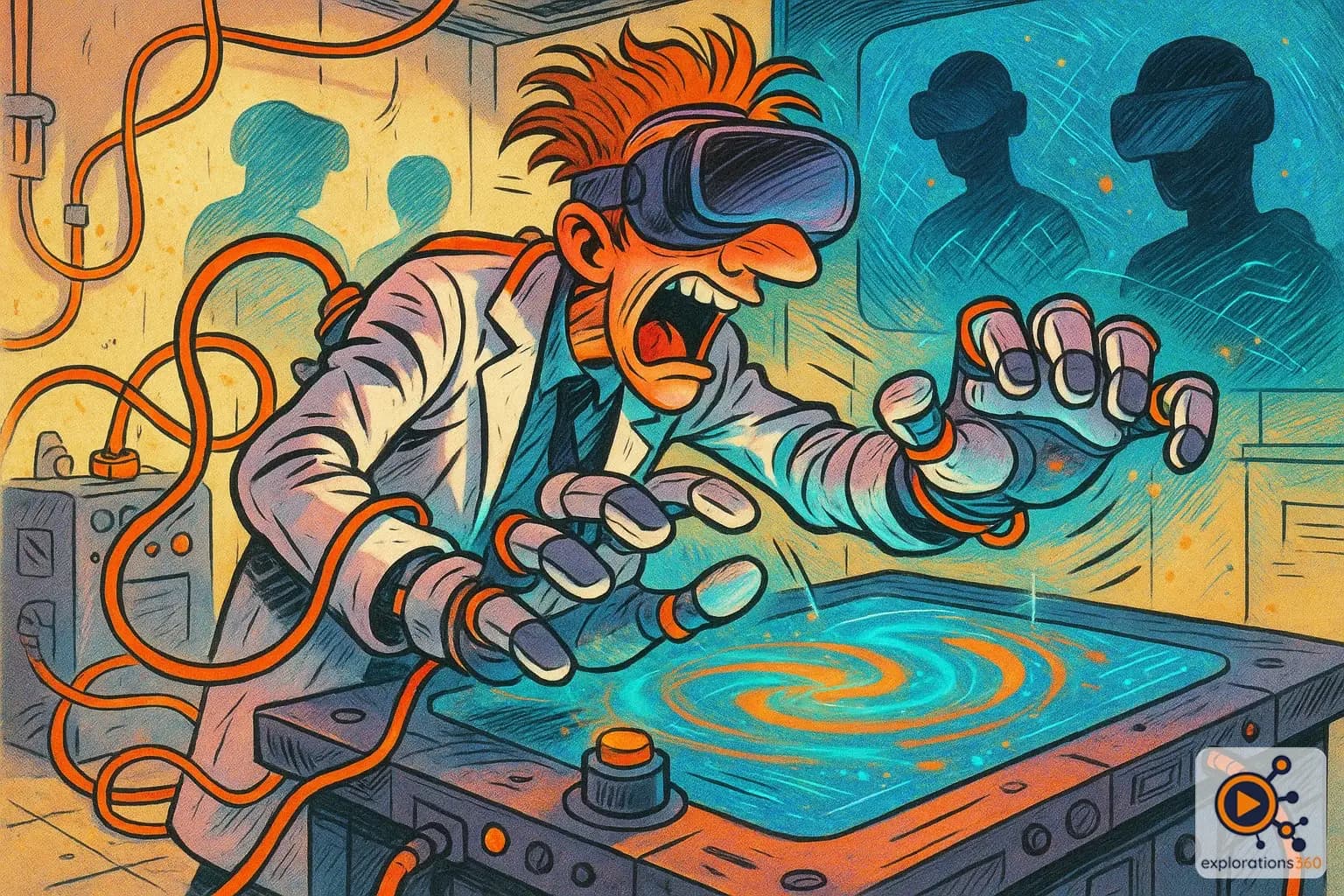
Haptic technology uses vibrations, forces, or pressure to create tactile feedback, allowing the user to "feel" virtual objects and surfaces. It ranges from simple controller vibrations to full-body haptic suits.
Real-world example
When you grab a virtual ball in VR, the controller vibrates to simulate the contact. Advanced haptic gloves can even reproduce the sensation of texture and resistance.
Practical applications
- VR training: feeling resistance when turning a virtual valve or tension in a surgical suture
- Gaming: impacts, weapon recoil, terrain feedback through controllers or vests
- Rehabilitation: guided exercises with force feedback for motor recovery
- Industrial design: "touching" a virtual prototype before manufacturing
Types of haptic feedback
Vibrotactile feedback
- Small vibration motors in controllers or wearables
- Most common and affordable form of haptics
- Simulates impacts, textures, and notifications
- Standard in all modern VR controllers
Example: The Meta Quest controllers vibrate differently when you touch wood vs metal in a VR scene
Force feedback
- Mechanical resistance that opposes your movement
- Simulates weight, stiffness, and physical barriers
- Requires specialized hardware (haptic gloves, exoskeletons)
- Used in professional training and research
Example: A haptic glove prevents your fingers from closing further when you grip a virtual solid object
VR scenario
In a VR surgical training, the trainee uses haptic-enabled instruments. When the scalpel contacts tissue, they feel calibrated resistance. When suturing, they feel the thread tension. This tactile feedback is what makes the difference between watching a video and truly practicing a procedure.
Why it matters in professional VR
- Haptics is the "third pillar" of immersion alongside visuals and audio
- Without touch feedback, VR interactions feel disconnected - your brain expects sensations that never come
- It is critical for professional training where muscle memory and tactile precision matter