

Explanation
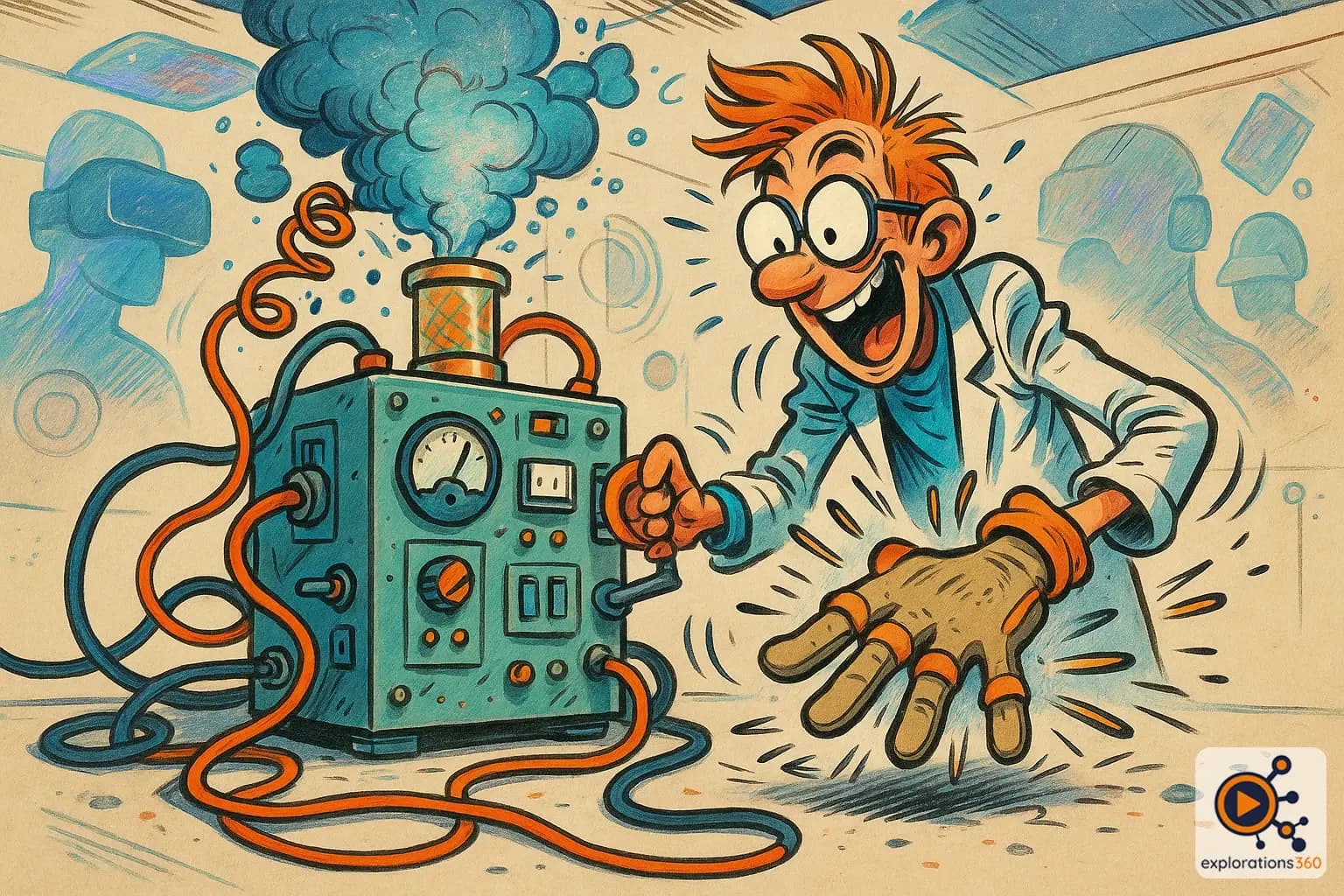
Vibrations and tactile sensations transmitted by controllers or accessories to provide physical feedback during virtual interactions. Haptic feedback reinforces the sense of presence by giving the body tangible cues about virtual events.
Real-world example
The vibration of your PlayStation controller when your car crashes into a wall.
Practical applications
- Action confirmation: feeling a vibration when pressing a virtual button
- Texture simulation: different vibration patterns for wood, metal, or fabric
- Collision feedback: feeling the impact when hitting an object
- Guidance: directional vibrations indicating where to look or go
Types of haptic feedback
Simple vibration (standard)
- Traditional vibration motors in controllers
- Variable intensity and duration
- Present on all current headsets
Example: A brief vibration when grabbing a virtual object
Advanced haptics
- More precise actuators (LRA, voice coil)
- Simulated textures at the fingertips
- Haptic gloves for realistic sensations
Example: HaptX gloves that simulate the resistance of squeezing a ball
VR scenario
In a defibrillator training scenario, the learner feels a clear vibration when they position the electrodes correctly, and a different vibration (stronger, pulsed) when the shock is delivered. The gesture becomes memorized through the body.
Why it matters in professional VR
- Haptic feedback anchors learning in body memory -- we retain more of what we "feel"
- Essential for gestural training where physical feedback is part of the professional skill
- Significantly reinforces the sense of presence and user engagement