

Explanation
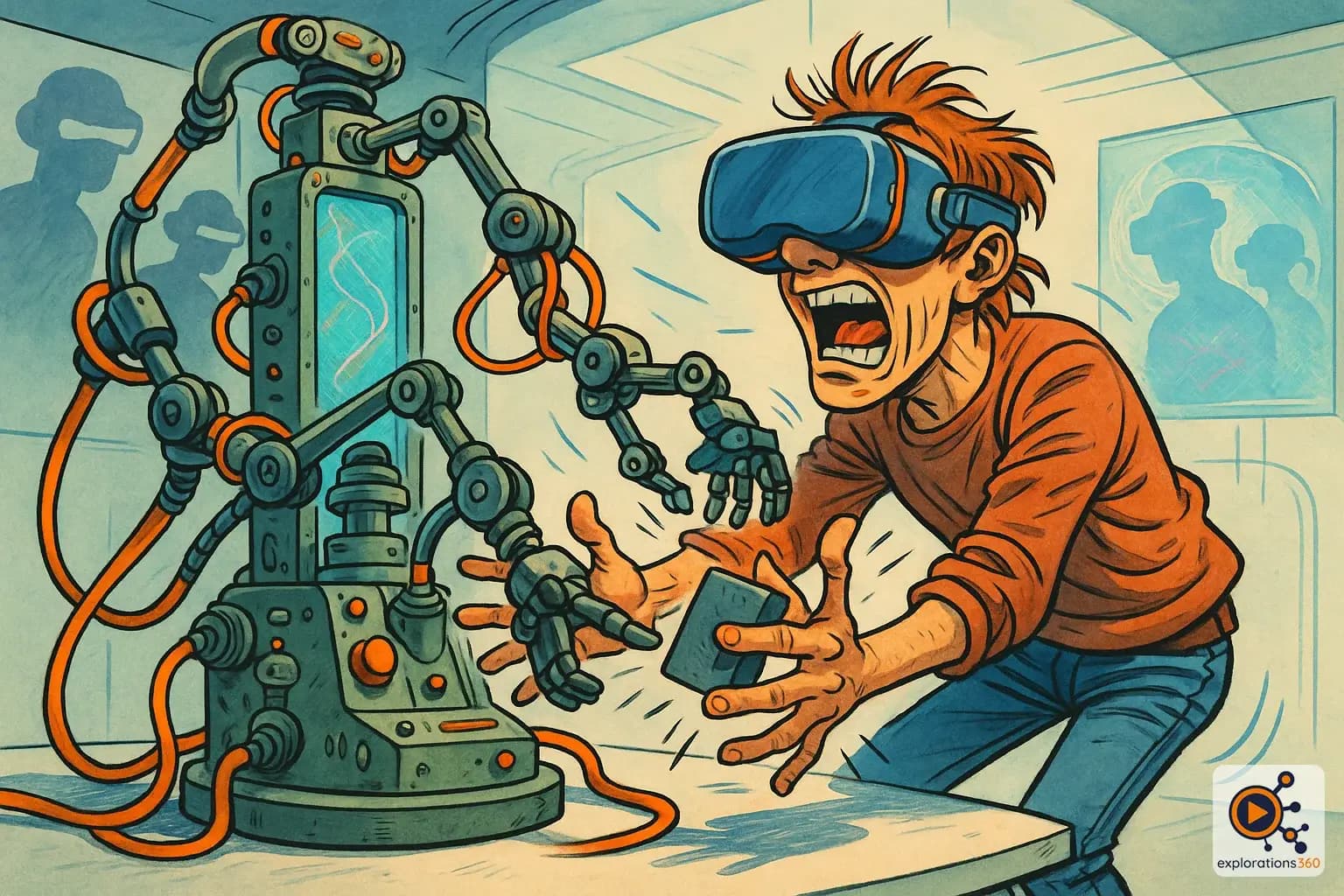
A mechanical device that transmits sensations of force and resistance to the user, enabling them to "feel" virtual objects and surfaces during simulations.
Real-world example
A surgical simulator where you feel the resistance of tissue as you "operate," including the realistic sensation of a needle passing through different tissue layers.
Practical applications
- Medical simulation: feeling tissue resistance, needle penetration depth
- Industrial training: manipulating tools with realistic force feedback
- Design and prototyping: "touching" virtual surfaces to validate ergonomics
- Teleoperation: controlling a remote robot with contact sensation
Types of devices
Desktop haptic arms
- Desk-mounted device, held in hand
- 6DOF with force feedback
- Professional use (medical, design)
Example: Geomagic Touch, Haption
Arm exoskeletons
- Worn on the entire arm
- Resistance at elbow, shoulder, and wrist
- Industrial applications and rehabilitation
Example: Exoskeleton for post-stroke rehabilitation
VR scenario
A surgeon practices a lumbar puncture on a VR simulator with a haptic arm. They insert the virtual needle and feel the resistance increase as it passes through the skin, then the characteristic "pop" of the dura mater. The gesture is learned before the first real patient.
Why it matters in professional VR
- The force feedback arm is the gold standard for medical and technical simulations
- It enables gestural learning that would otherwise be impossible (rare, risky, or expensive procedures)
- Significant investment but proven ROI in medical training