

Explanation
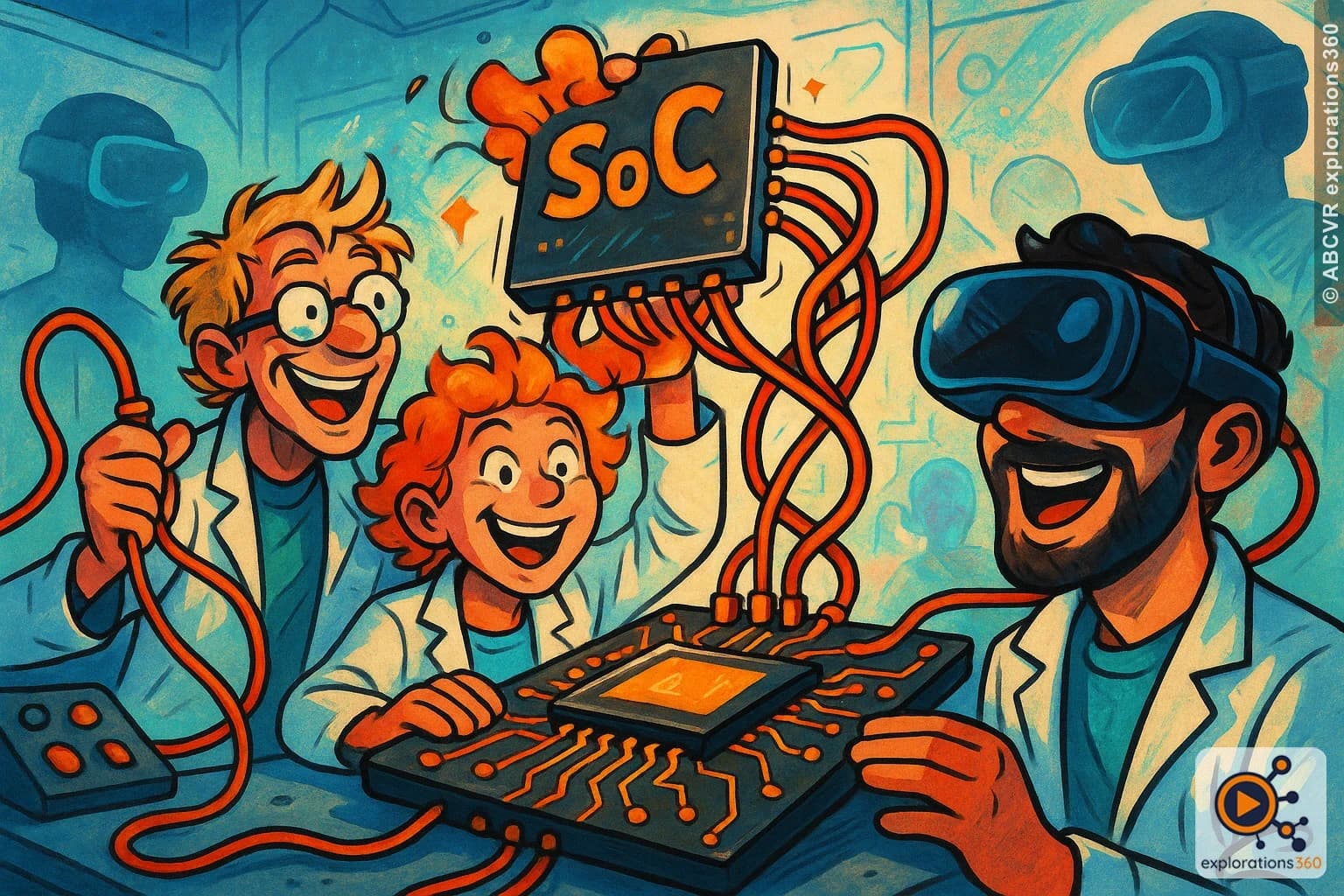
A SoC (System on Chip) is an integrated circuit that combines the processor (CPU), graphics processor (GPU), memory, I/O controllers, and sometimes an NPU (AI-dedicated processor) on a single chip. In standalone VR/AR headsets, the SoC determines the available computing power and thus the graphical quality, smoothness, and possible features. The Qualcomm Snapdragon XR2 Gen 2 powers the majority of current headsets.
Real-world example
The Meta Quest 3 features a Snapdragon XR2 Gen 2 that enables it to run MR games with color passthrough, hand tracking, and spatial audio simultaneously.
Practical applications
- Graphics performance: texture quality, lighting, real-time polygon count
- Tracking: powering tracking algorithms (hands, eyes, position) without latency
- On-device AI: dedicated NPU for object recognition and scene segmentation
- Battery life: SoC energy efficiency = headset battery duration
Major SoCs in XR
Qualcomm Snapdragon XR2 Gen 2
- Current standard (Quest 3, Pico 4 Ultra)
- Improved Adreno GPU
- NPU for on-device AI
Example: The SoC that enabled the Quest 3's color passthrough
Apple M2 / R1
- M2 for rendering, R1 for sensors
- Desktop-class power in a headset
- Apple Silicon architecture
Example: The Vision Pro uses 2 chips: M2 (graphics) + R1 (12 cameras in real time)
Next generation
- Snapdragon XR2+ Gen 2, future XR3/XR4
- Smaller die = more power, less heat
- On-device generative AI
Example: Future SoCs promise mobile ray tracing in VR
VR scenario
An integrator chooses between two headsets for a training deployment. Model A (older SoC) struggles to display the factory's detailed 3D models: stuttering and latency. Model B (XR2 Gen 2) renders them effortlessly with passthrough enabled. The SoC makes the difference between a frustrating experience and a smooth training session.
Why it matters in professional VR
- The SoC is the #1 limiting factor for standalone headsets
- It determines what is possible: graphics, tracking, AI, passthrough
- XR SoC evolution follows mobile chip trends with a 2-3 year lag
- SoC choice directly impacts headset price and battery life