

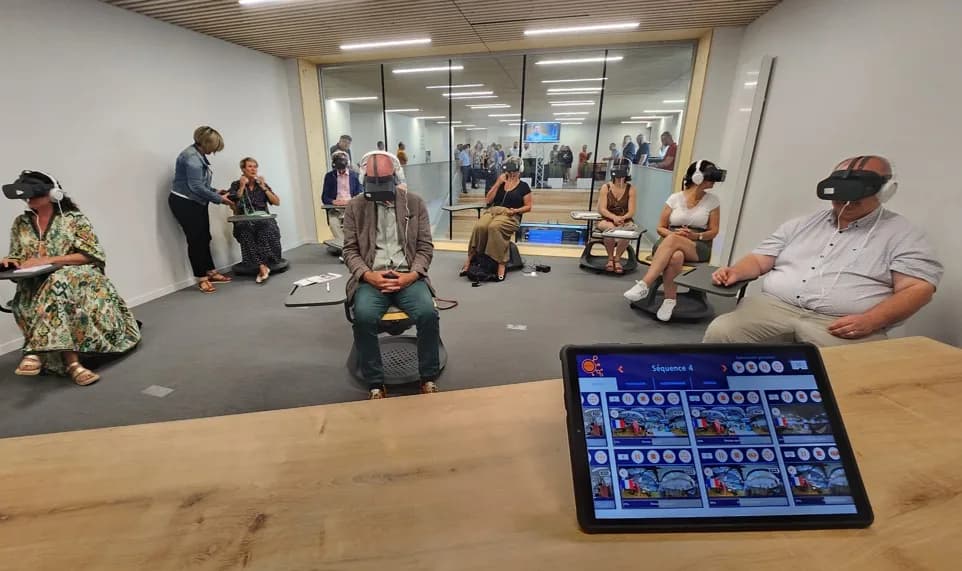
Immersive Training: here are some serious studies regularly cited that show virtual reality (VR) significantly improves information retention rates in training contexts:
Academic studies & meta-analyses on immersive training
- A meta-analysis in education (K-12 and higher education) reveals that immersive VR environments deliver significant gains on knowledge tests, far more effective than traditional videos or slideshows.
- A study in engineering by Lin et al. (53 students, 3 groups) shows that after mechanical assembly training, the VR training group achieved the highest post-test scores, outperforming both the desktop VR and hands-on training groups.
- A comparison between VR training, desktop VR, and slideshow presentation in food microbiology indicates that VR promotes long-term retention: students show greater visual attention and lasting memory.
I/ITSEC 2022 Summary - "Challenging the Status Quo in Nursing Education: Digital Transformation with Virtual Reality"
Authors: Juliet Kolde, Jeffrey Olsen, Jack Pottle, Molly Schleicher - results published by Nightingale College
Presented at I/ITSEC 2022, this study describes the multi-phase pilot program conducted by Nightingale College, integrating immersive virtual reality (partnership with Oxford Medical Simulation + Meta Quest 2 headsets) into the distance nursing degree curriculum.
Key findings from a 5-year study in hospital settings from 2020 to 2025:
- Progressive implementation of VR simulations across all clinical courses in the degree program.
- Interactive immersive scenarios (diagnoses, treatments, interactions with virtual patients and their families), with personalized feedback, performance metrics and debriefing.
- Very positive preliminary results regarding students' critical thinking and clinical reasoning.
- Overall positive student feedback: immersion valued, ability to repeat scenarios at will, increased confidence and reduced anxiety.
- Notable improvement from spring 2023 with a jump of nearly 10 points on average on the BSN 205 practical exam (first VR module), improving learner preparation for real simulation. Average 5.9% better scores, up to +171 points on final exams.
- Reduction in training costs and time by ~40%.
Field studies & industry reports
- The University of Maryland (Krokos, Plaisant & Varshney, 2018) reports a 12% increase in median recall and 8.8% in accuracy in VR compared to screen-based training, across 40 participants.
- Transfr Inc. observes, one week after training:
- 86% performance on VR-trained tasks versus only 71% with slide presentations.
- PwC (2020) indicates that VR learners are up to 4x more focused and benefit from a 75% retention rate, compared to 10% for reading and only 5% for lectures.
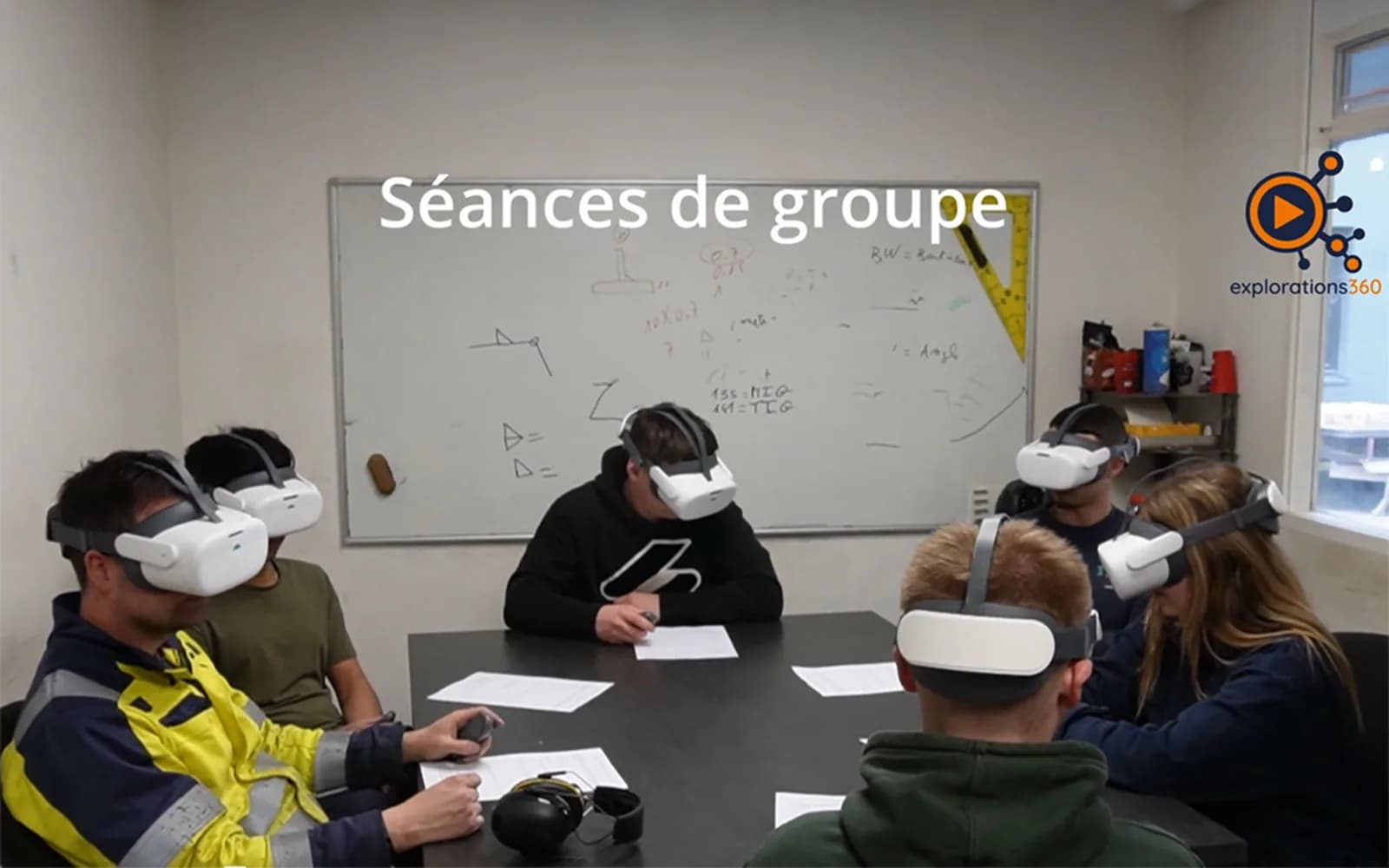
Recent research in school settings
An international study (317 students in El Salvador, April 2025) shows that the VR group had a 35% increase in retention, compared to only 2.6% for the traditional group one week after training.
New studies 2024-2025
- Lindner et al. (2025) - Journal of Medical Internet Research: randomized controlled trial on 72 medical students (emergency medicine). 30-day retention: 75.4% in VR vs 69.0% with video. Long-term knowledge gain: 17.8% (VR) vs 11.9% (video). Satisfaction score: 4.83/5 in VR vs 3.44/5 with video.
- Yu, Shi, Dong & Kang (2025) - Behavioral Sciences: 64 students, 2x2 factorial design (HTC Vive Pro headset vs screen). Declarative knowledge: large effect size (d=0.85). Procedural knowledge: d=0.89. Significant improvement in intrinsic motivation and self-efficacy (p<0.001).
- Qawqzeh et al. (2025) - Scientific Reports (Nature): 200 participants in an industrial context (Industry 4.0). Safety awareness: +30% vs traditional training. Safety knowledge: +25%. Statistically significant results (p=0.000, Mann-Whitney U).
- Liu, Huang & Lei (2025) - JETDE, Syracuse University: quasi-experimental design in middle school (arts). The VR group shows significantly higher retention than the traditional classroom group, with improved creativity and engagement.
- Tsukada et al. (2024) - JAMA Network Open: randomized trial on 90 students (medicine, pharmacy). Personal protective equipment (PPE) training: VR 17.70/20, face-to-face 17.57/20, video 15.87/20. VR matches in-person training (p=0.98) and significantly outperforms video (p=0.02).
- Castillo-Rodriguez et al. (2025) - Healthcare (Basel): randomized controlled trial on 93 nurses and students in emergency care. Post-training knowledge: VR 8.66/10 vs control 7.98/10 (p=0.019). Average VR gain: +4.46 points vs +4.04 for the control group.
In summary
| Training method | Information retention |
|---|---|
| Traditional reading | ~5-10% |
| Lectures / slideshows | 10-20% |
| Immersive VR training | 75-86% |
On average, VR multiplies retention rates by 4 to 10x compared to traditional methods. The immersive aspect, with maximum focus and active repetition, promotes a deeper consolidation of knowledge.